Japanese bathing culture has long fascinated me — its rituals, traditions, social customs, beauty, and architecture. So when we travelled to Japan, it felt only natural to set aside time to visit and experience onsens and traditional ryokans.
Along our journey from Naoshima to Tokyo, we chose two onsens — Hoshi and Takaragawa — both located in Gunma Prefecture, northwest of Tokyo. The story and photographs here are from Hoshi Onsen - an old, traditional and beautiful indoor onsen in Minakami.
Choosing the two onsens to visit turned out to be hard - with 3,000 onsens to pick from. But slowly during the planning process we found that this route to Tokyo made sense - and would give us a chance to experience two remarkable and very different onsens - Hoshi Onsen with it's indoor baths (uchiyu) and Takaragawa with it's outdoor baths (rotenburo).
Hoshi Onsen
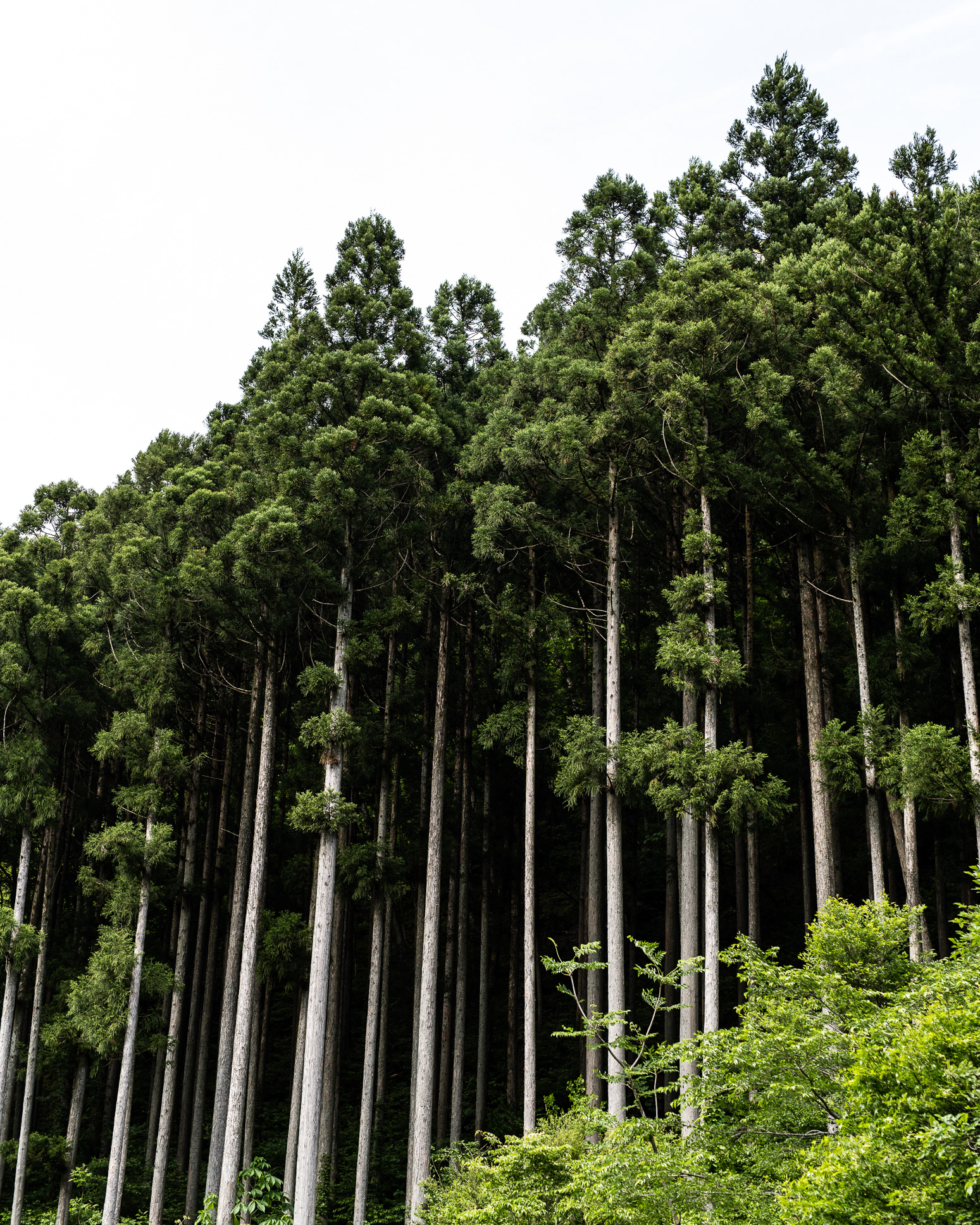
Cedar trees at Hoshi Onsen - photo Martin Kaufmann
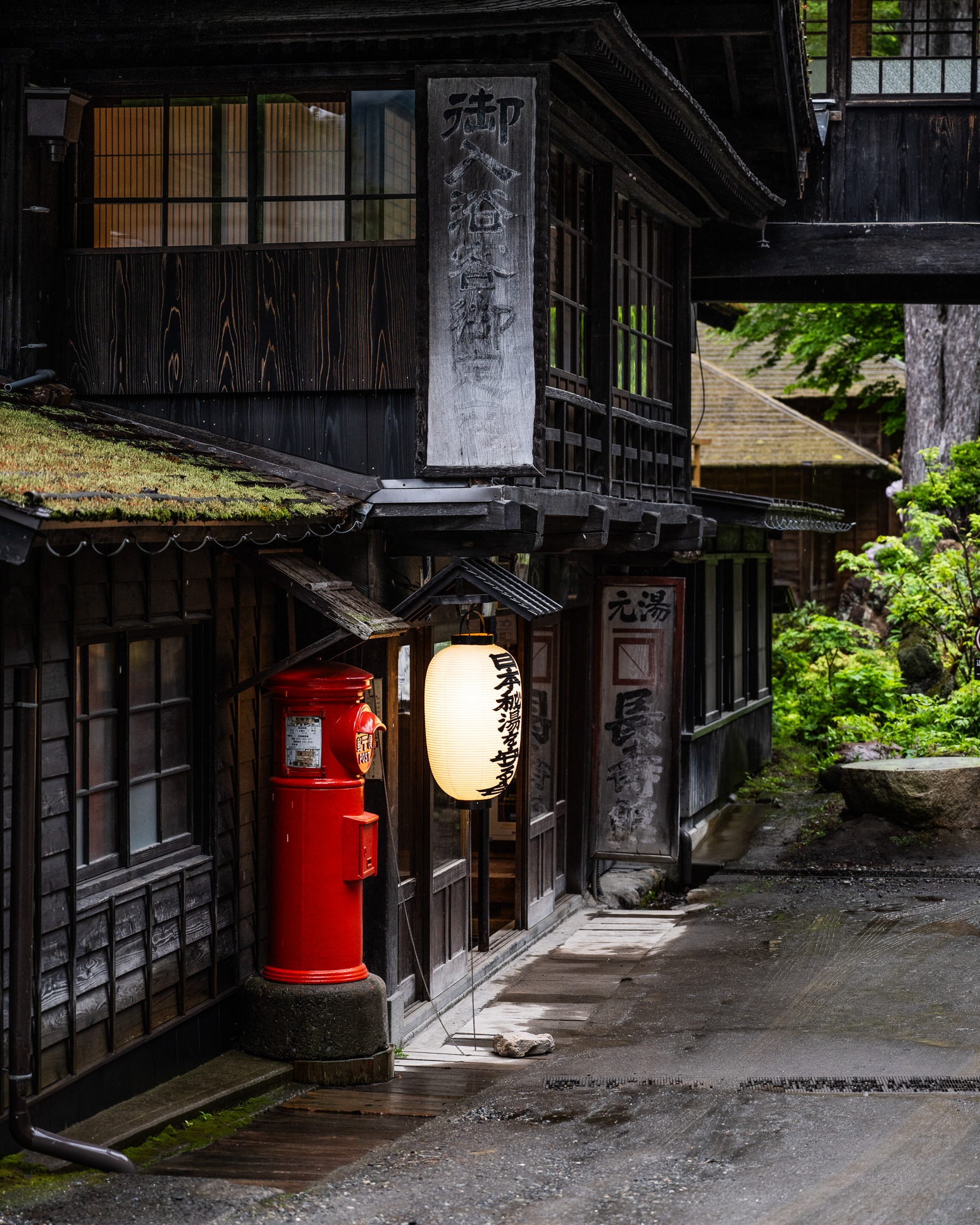
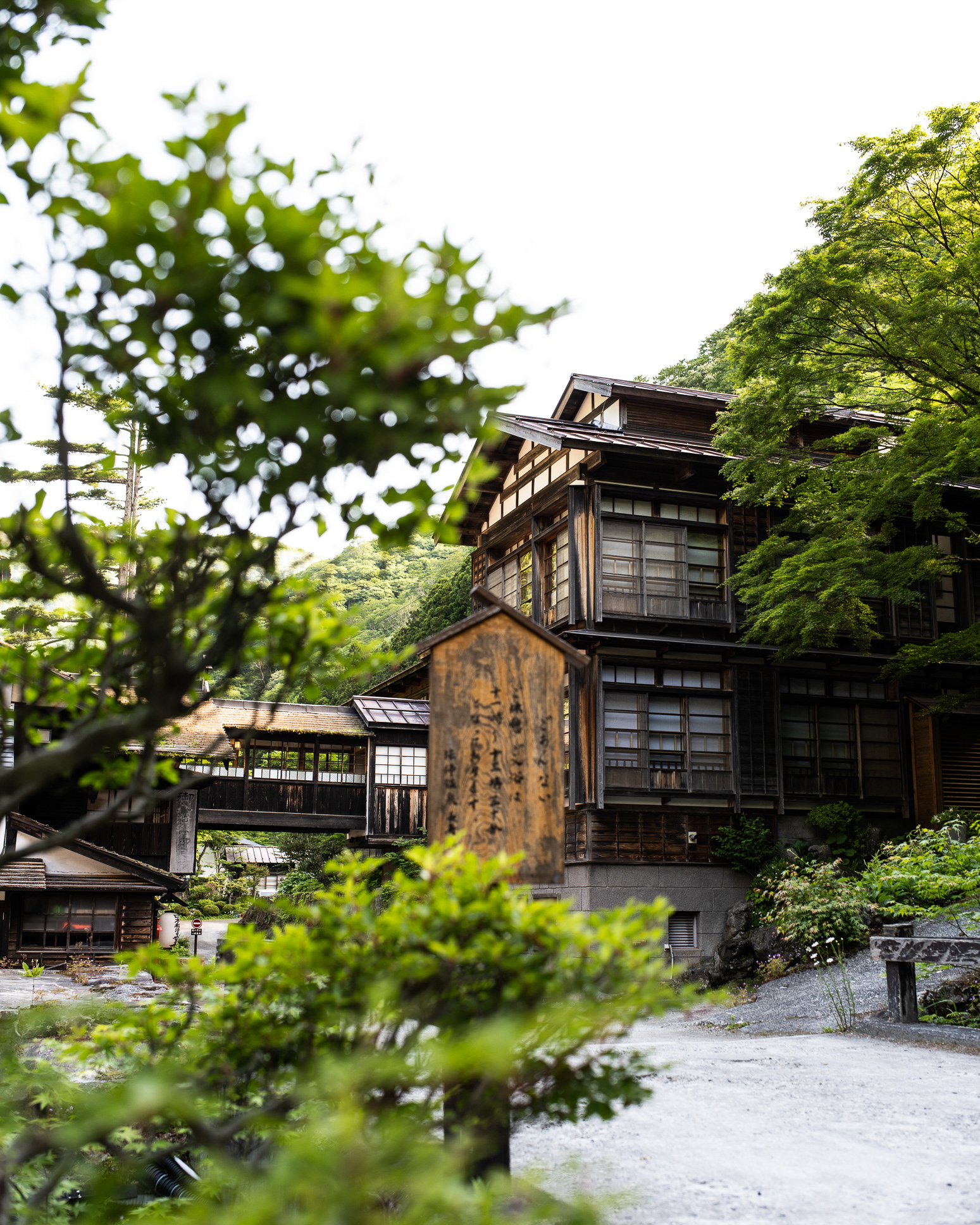
The beautiful entrance and mail box at Hoshi Onsen - photo Martin Kaufmann
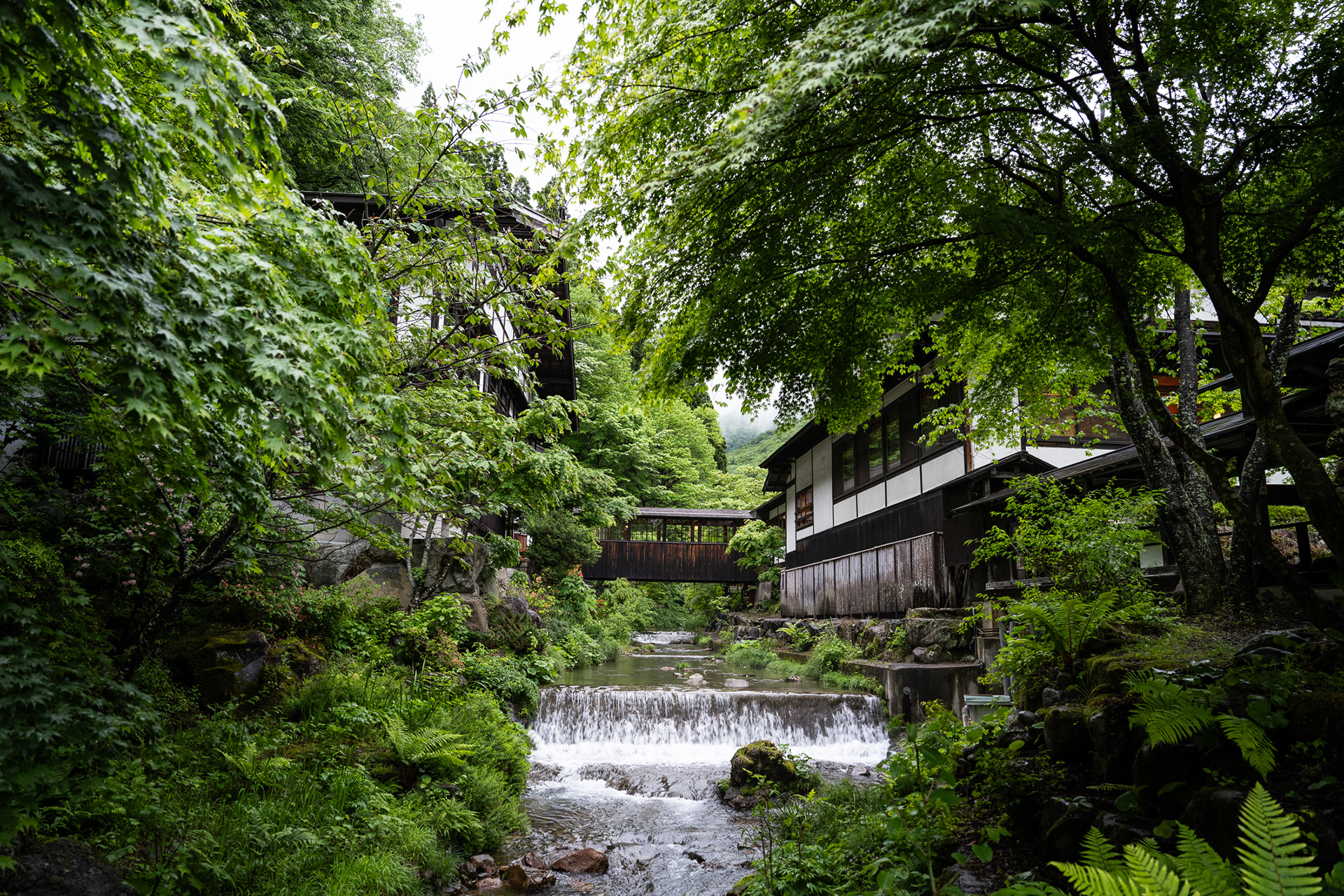
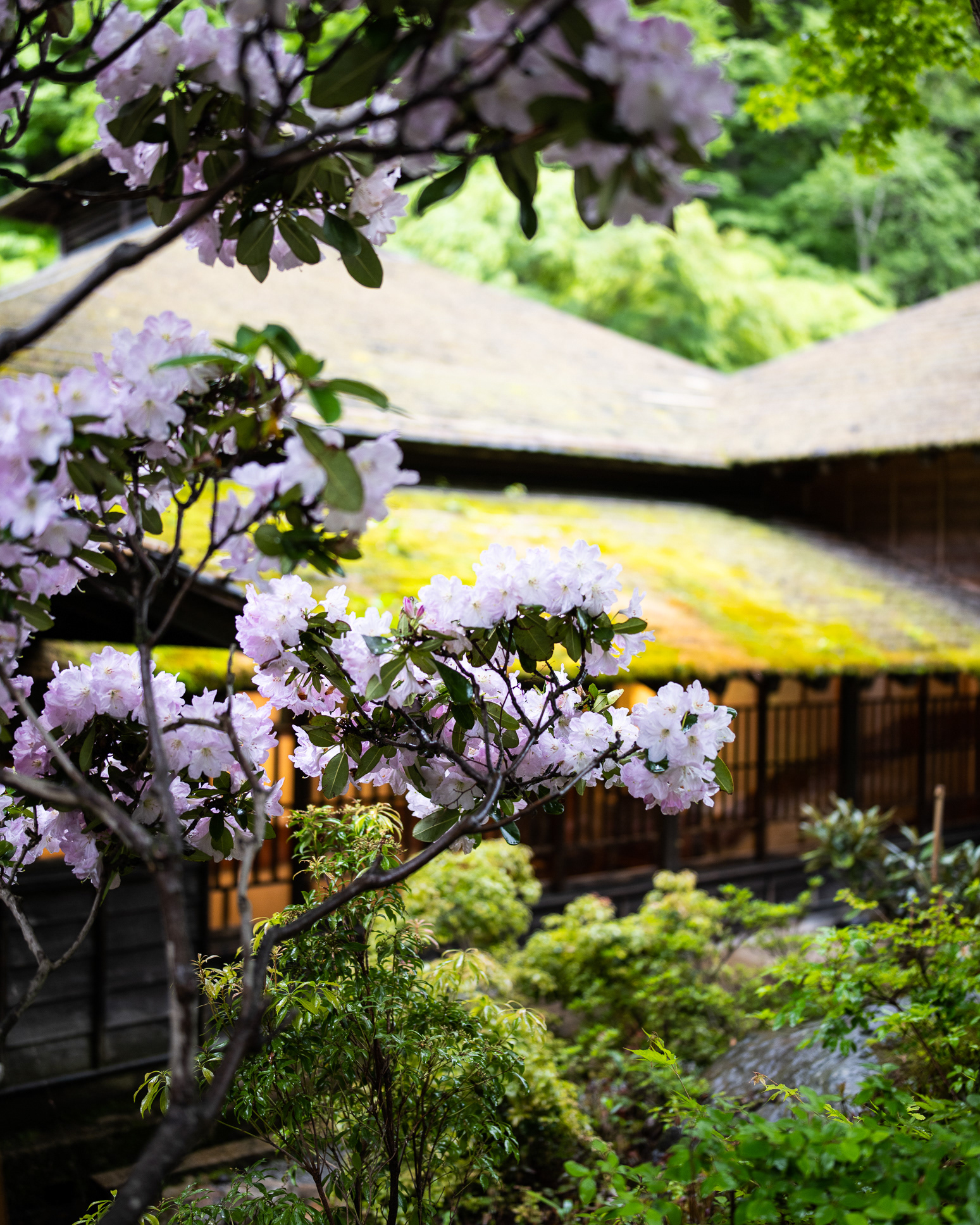
Blooming flowers at Hoshi Onsen in Gunma, Japan - photo Martin Kaufmann
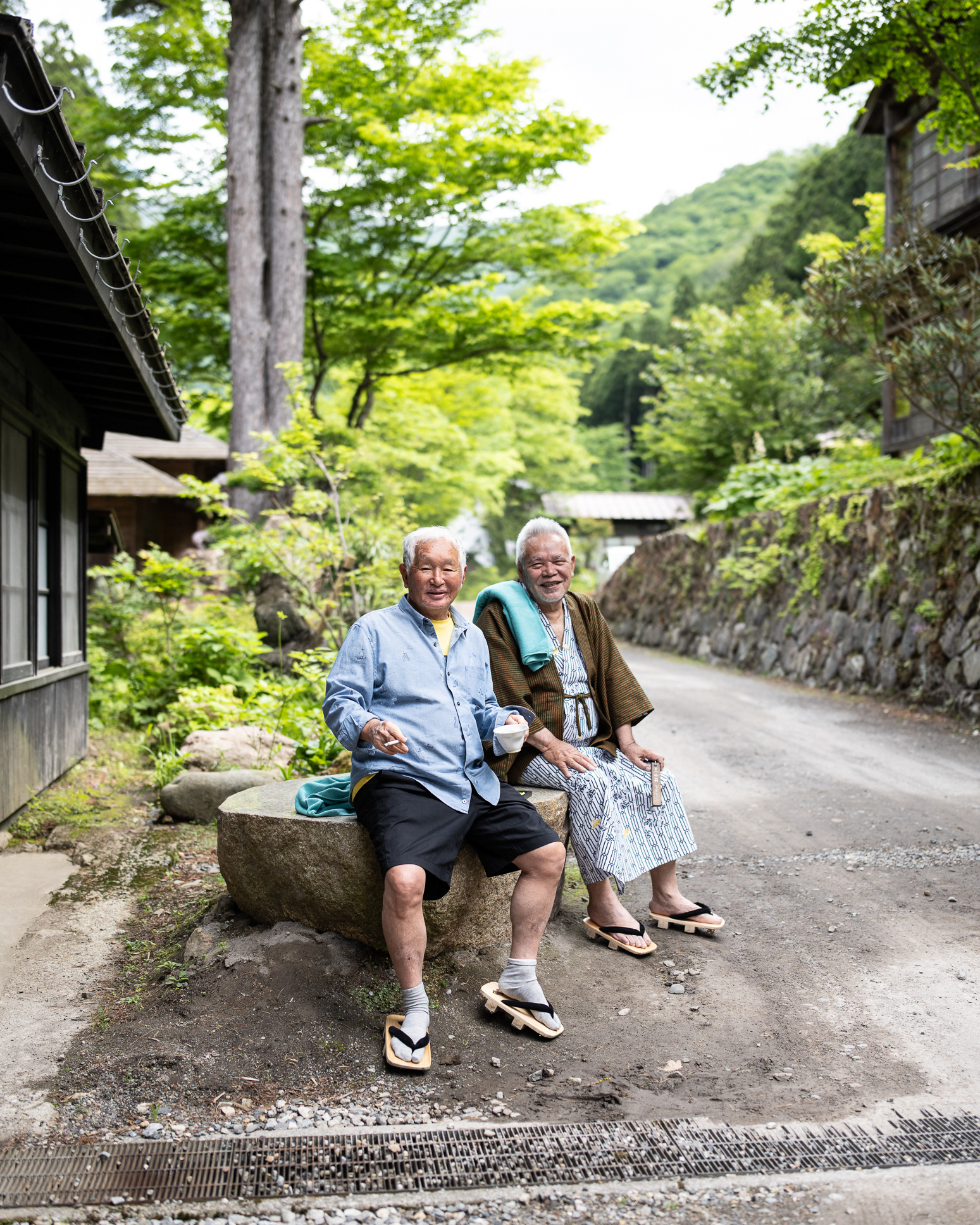
Meeting these two Japanese gentlemen outside Hoshi Onsen - photo Martin Kaufmann
More than six hundred years ago, a wandering Buddhist monk, Kobo Dashi, is said to have discovered a hot spring deep in the mountains of what is now called the Gunma Prefecture. The place was named Hoshi No Yu / Hoshi's hot spring and a ryokan was build 150 years ago.
We are in central Japan, an area known for its deep forests and clear rivers, The surrounding landscape is defined by wooded hills and mountains, with cedar and deciduous forests that change dramatically through the year. The region is sparsely populated and feels timeless. Small roads wind through the countryside, passing traditional houses, shrines, and occasional farms.
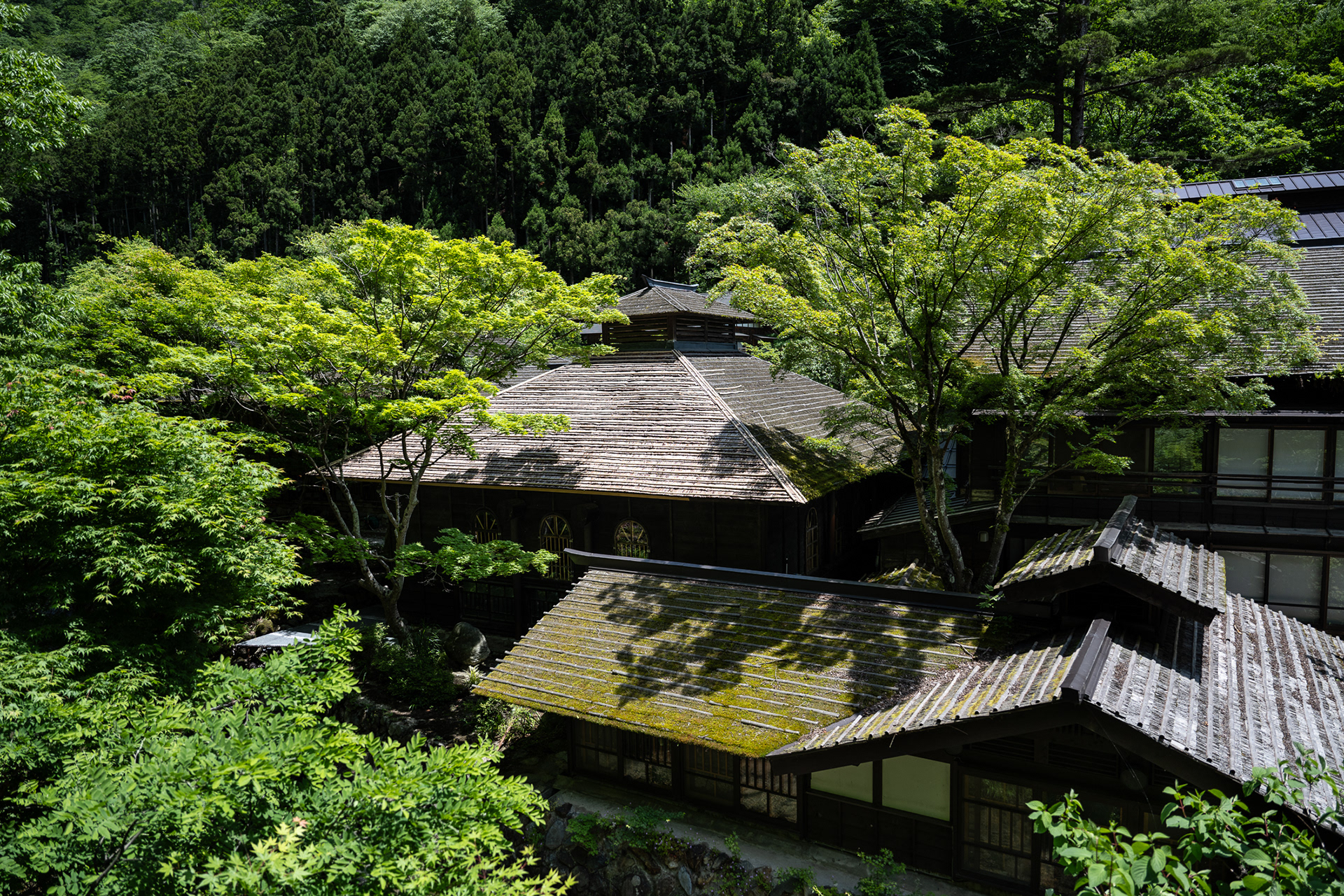
Hoshi Onsen itself is part of a historic hot spring area, where naturally heated mineral water has been used for bathing for centuries. Hoshi Onsen Chōjukan was founded in 1875 and the core of its architecture dates from the Meiji period (late 19th century). The buildings are primarily timber‑framed wooden structures that have been carefully preserved and maintained. Much of this original construction remains visible in the main inn and bathhouse buildings. Hoshi Onsen was designated a Registered Tangible Cultural Property of Japan in 2006.
It is easy to reach Hoshi Onsen by public transport. We came from Naoshima and took the train to Nagano. rented a car and drove for three hours to get there. From Tokyo you will have to take the Shinkansen to Jōmō-Kōgen Station, a local train to Minakami Station and a taxi from there to Hoshi.
The drive from Nagano to Hoshi Onsen was beautiful with rivers, mountains and small villages. But also interesting, if not a sad, to see how changes have affected life there. On the way we saw a lot of abandoned skiing resort and onsens - reflecting both climate change and an onsen culture which has declined for decades... but that is another story.
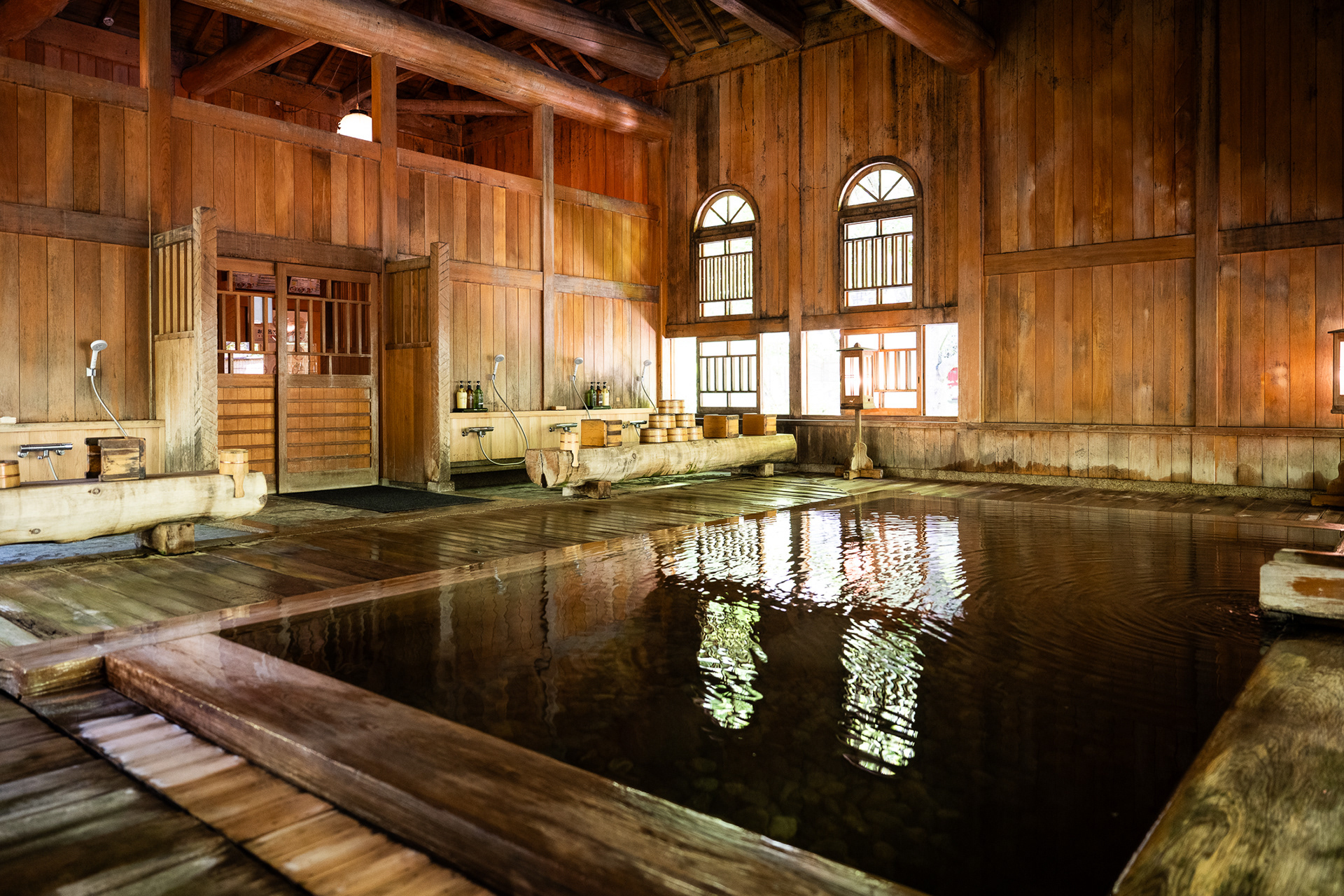
Hoshi No Yu... the iconic main bath
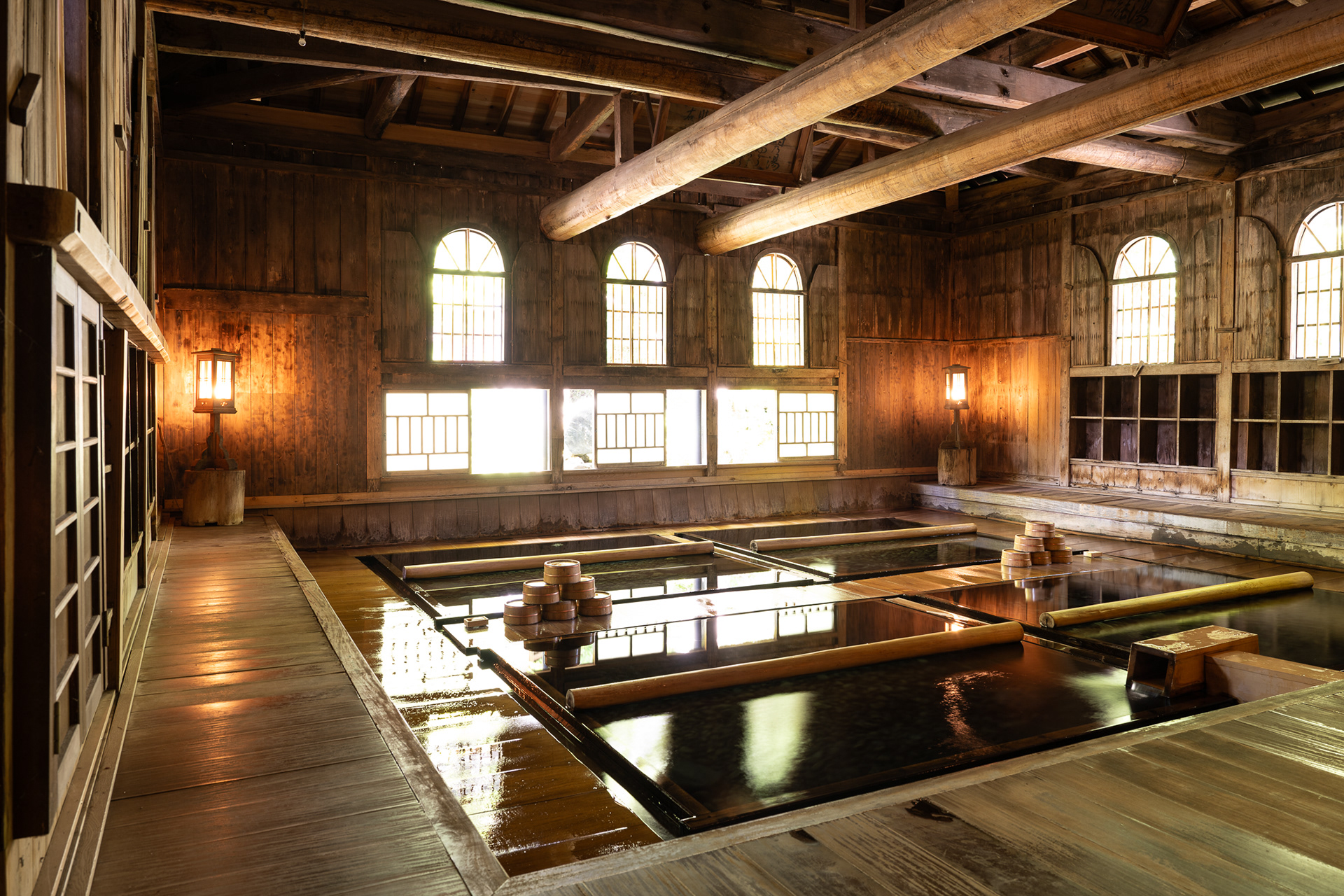
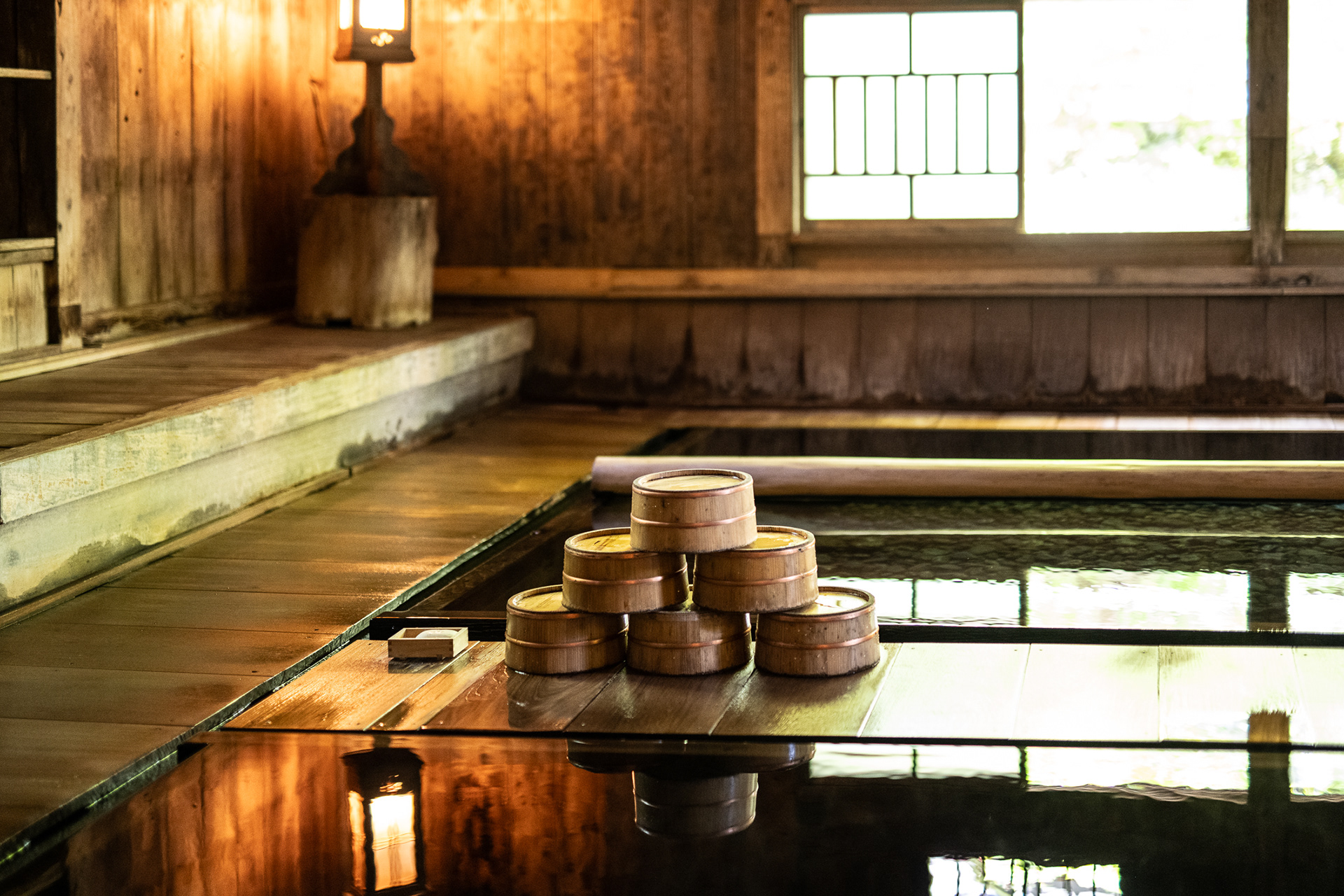
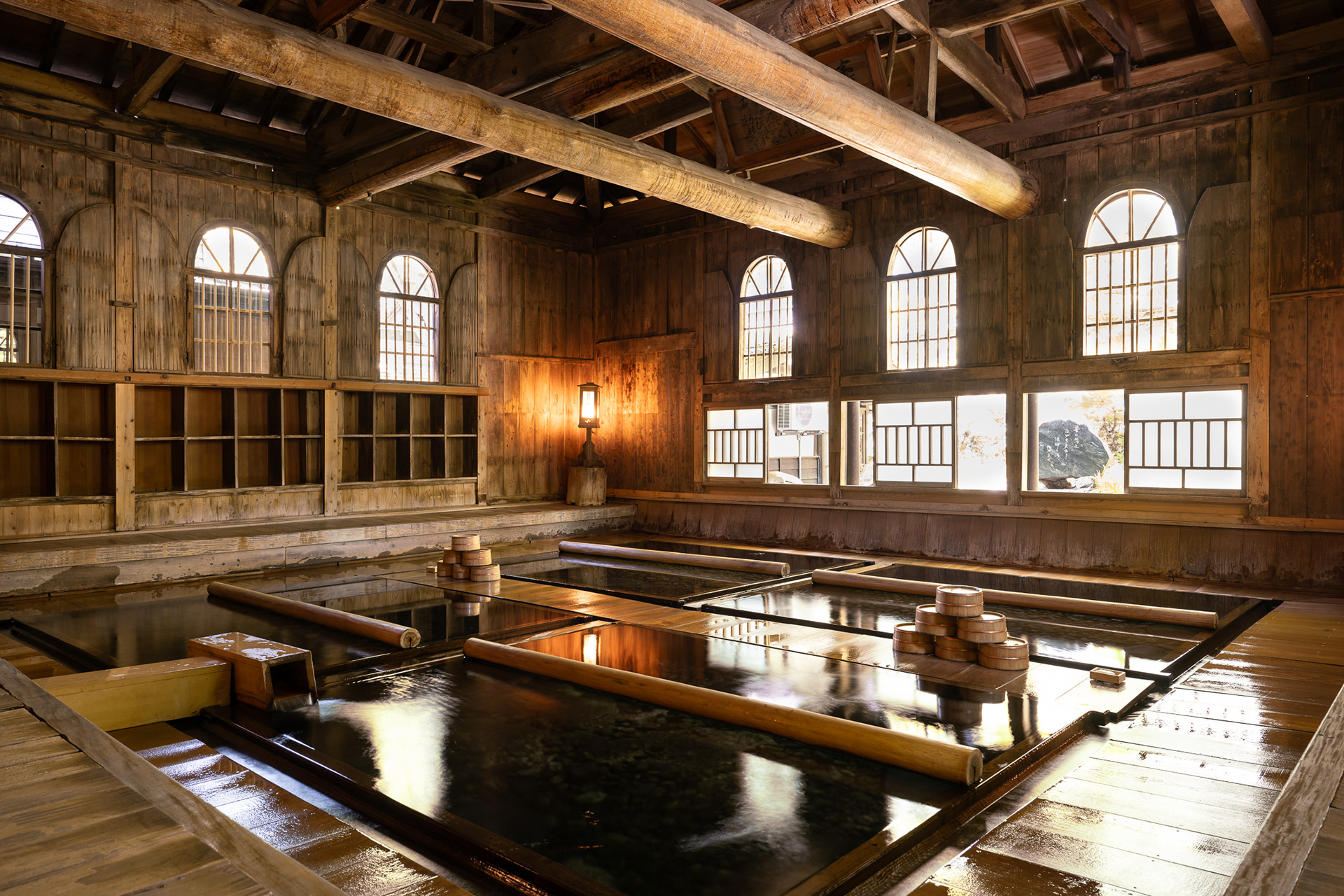
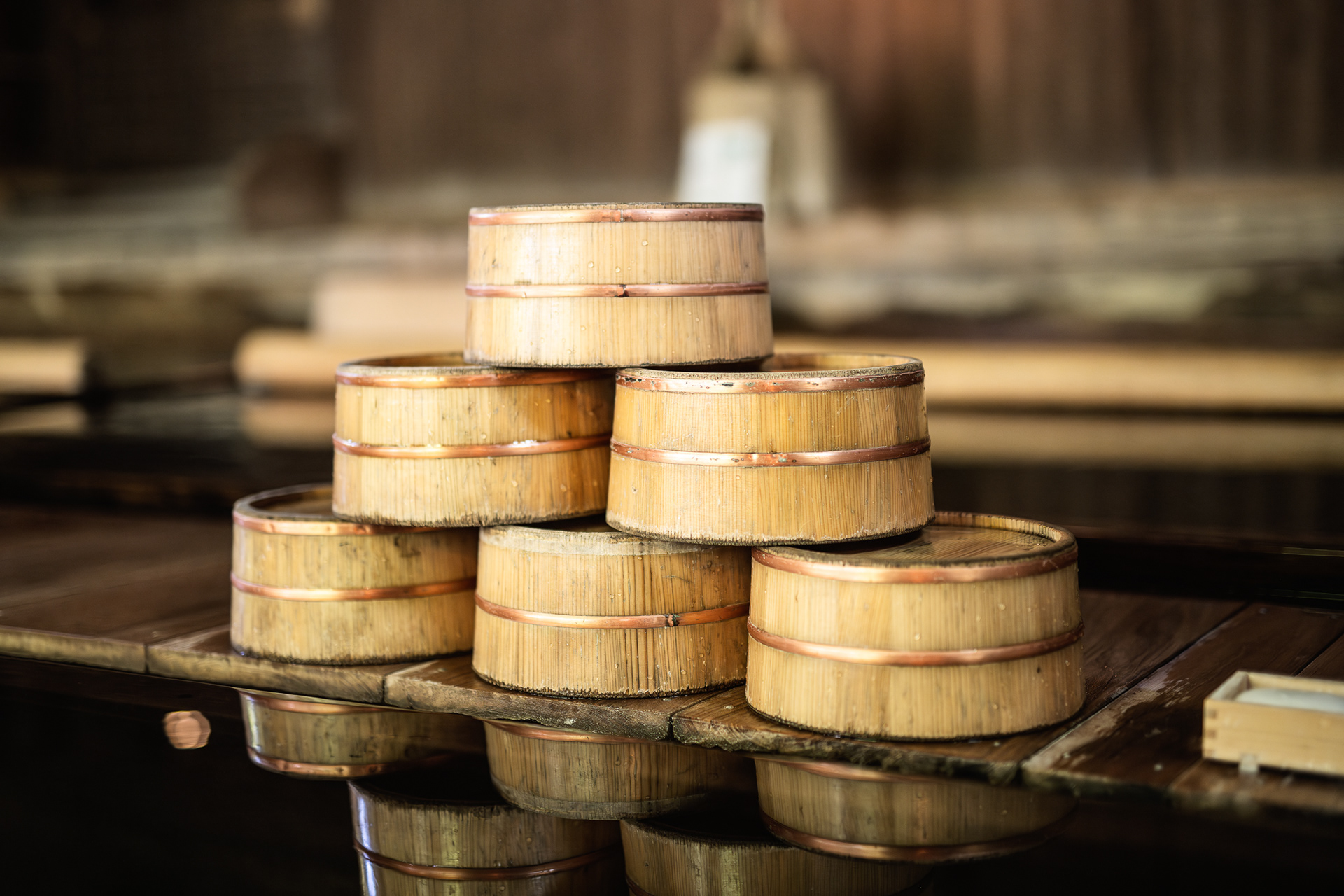
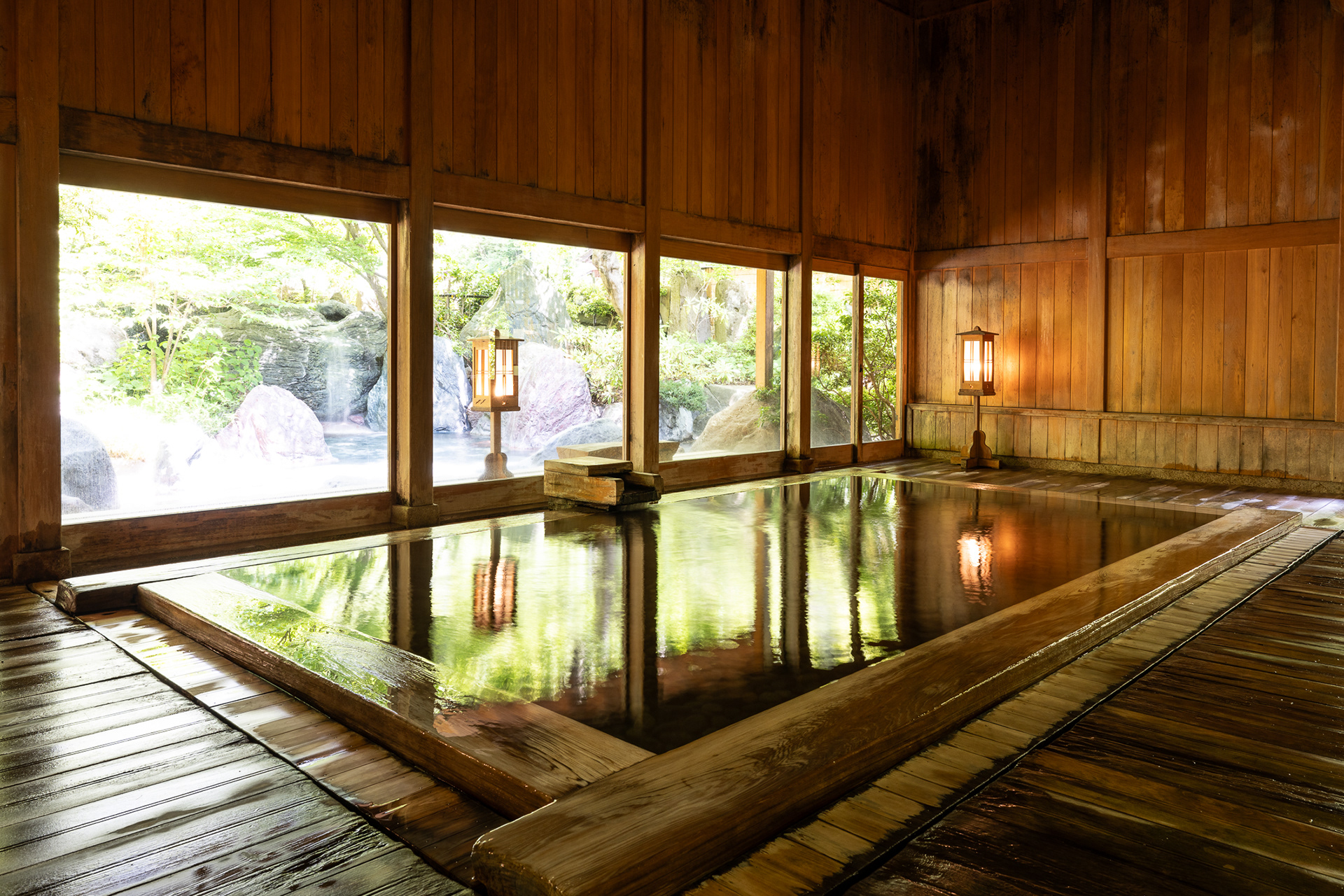
Hoshi No Yu at Hoshi Onsen (Japanese hot spring) - mixed gender bath - photo Martin Kaufmann
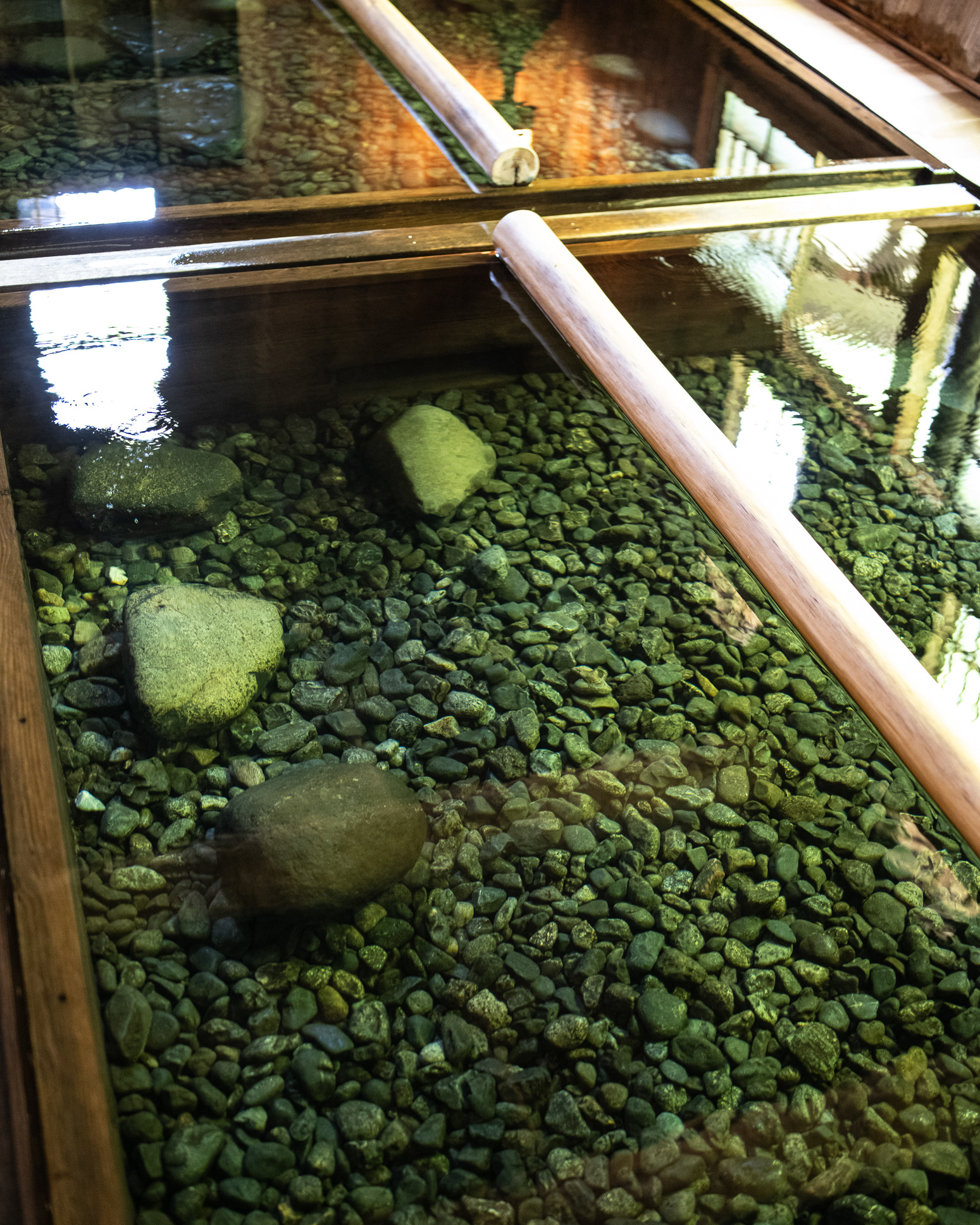
The cobblestones at Hoshi Onsen (Japanese hot spring) - photo Martin Kaufmann
Hoshi No Yu is the main bath at Hoshi Onsen. The bath area dates back over a century and is housed in a beautiful wooden structure that evokes the ryokan’s old-world charm. Unique for this bath is the way the spring water bubbles up naturally through the stones on the bottom of the tubs, so you’re literally soaking where the water first emerges. This bath is usually mixed-gender and all are naked (called konyoku). Historically, mixed nude bathing was normal in Japan. For centuries, onsens were communal spaces used by entire villages - men, women, and children. It still exist but is the exception rather than the rule.
The spring water at Hoshi Onsen is classified as a sulfate spring - often referred to in Japan as a gypsum spring. Water naturally bubbles up through the stones on the bath floor without requiring pumps, preserving its mineral content right at the source. The water is colorless, transparent and odorless. Hoshi Onsen describes it like this: "The spring properties include colorless and transparent calcium, sodium sulfate (gypsum spring) at 43 degrees Celsius, which help cure illnesses and injuries such as a gastrointestinal disorder, burn, and arteriosclerosis".
Tamaki No Yu
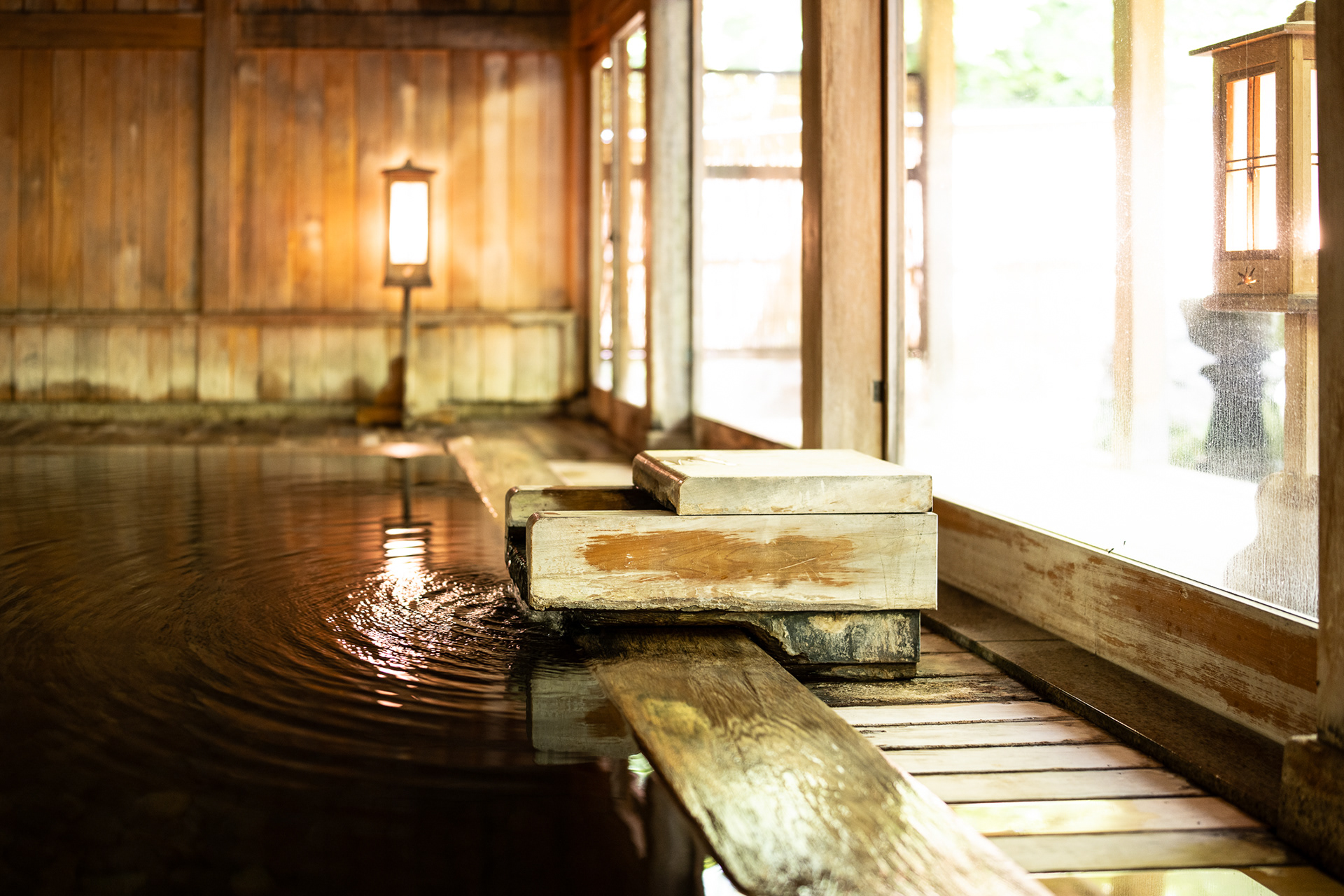
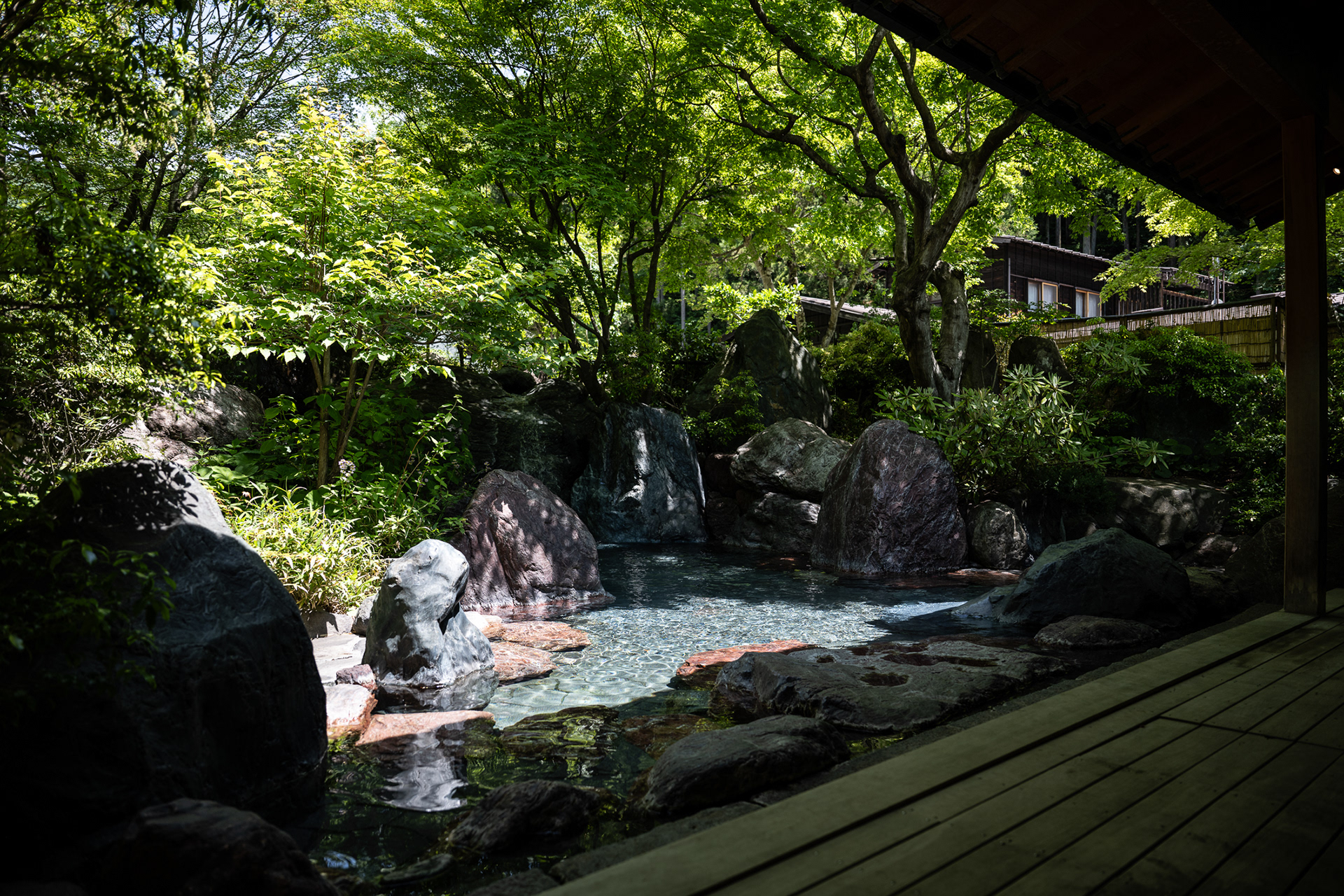
Tamaki no Yu at Hoshi Onsen - the outdoor bath, rotenburo - photo Martin Kaufmann
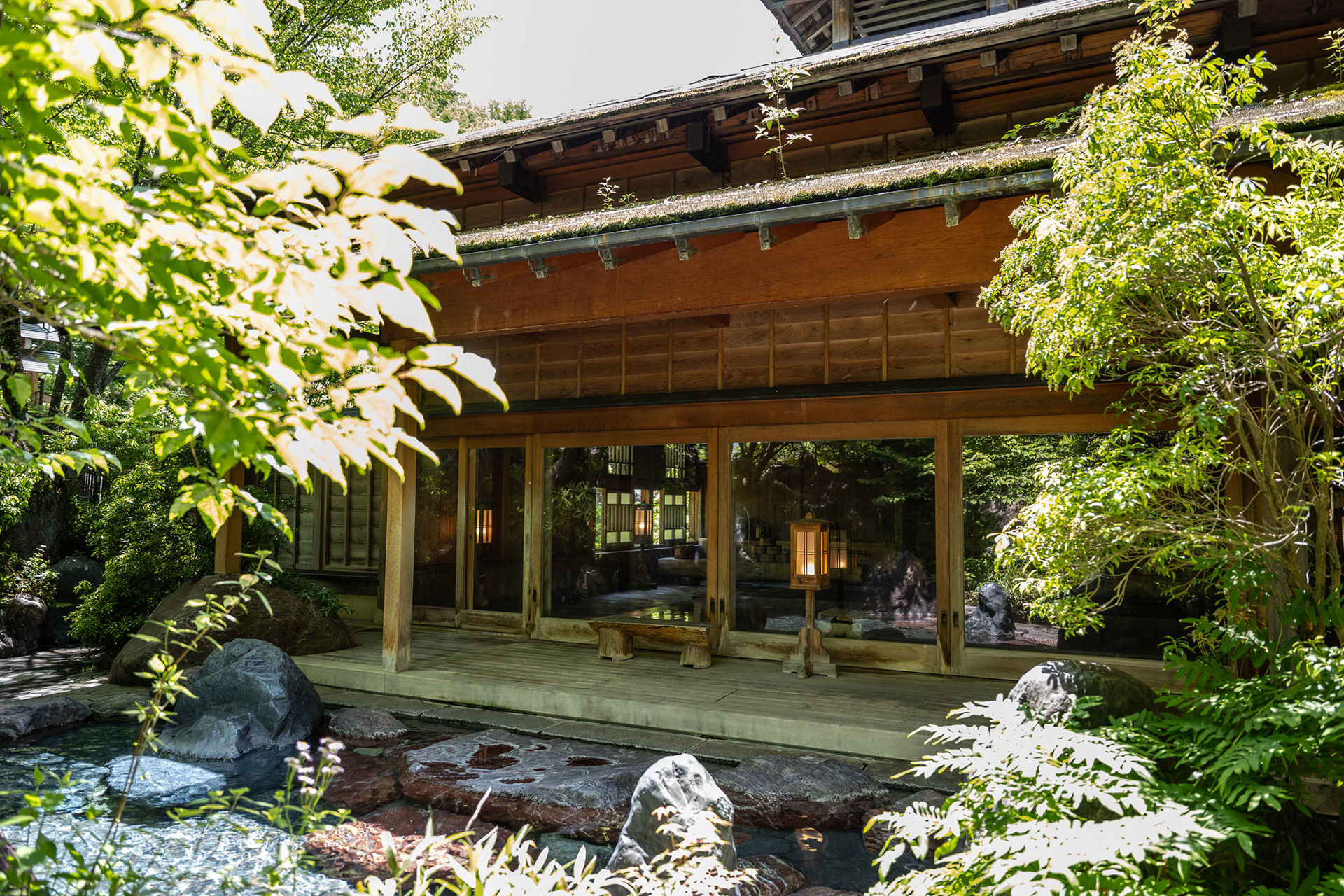
Tamaki no Yu at Hoshi Onsen seen from the outdoor bath - photo Martin Kaufmann
Tamaki no Yu is the second largest bathhouse at Hoshi Onsen, constructed entirely of Japanese cypress offering a beautiful wood atmosphere and a connection with nature. Unlike Hoshi‑no‑Yu, Tamaki no Yu has a calmer, more outdoors‑oriented feel including the small rotenburo.
I did visit the third bath as well - Choju No Yu. A beautiful and smal bathhouse for women but not as spectacular as the other two.
Rooms at Hoshi Onsen...
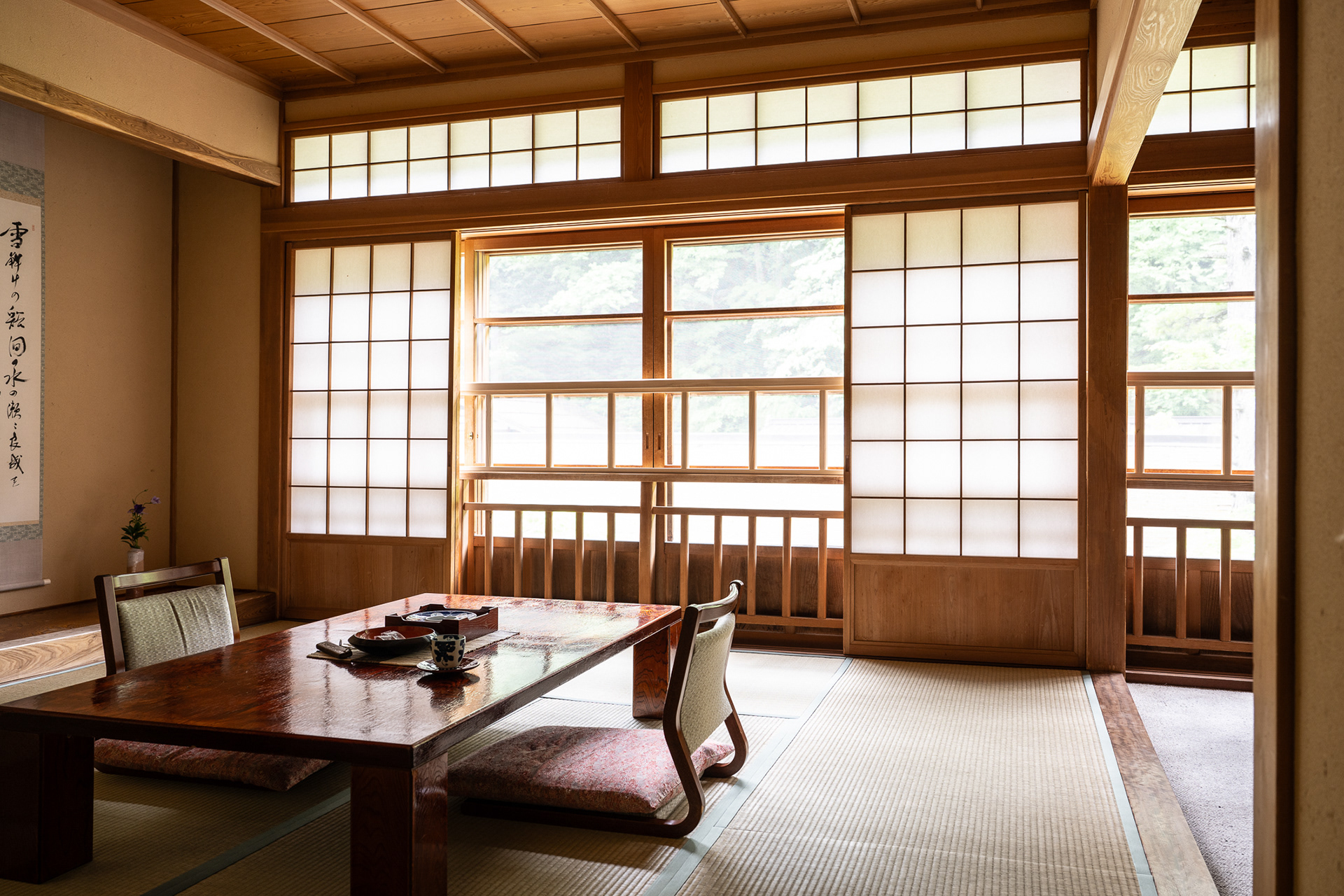
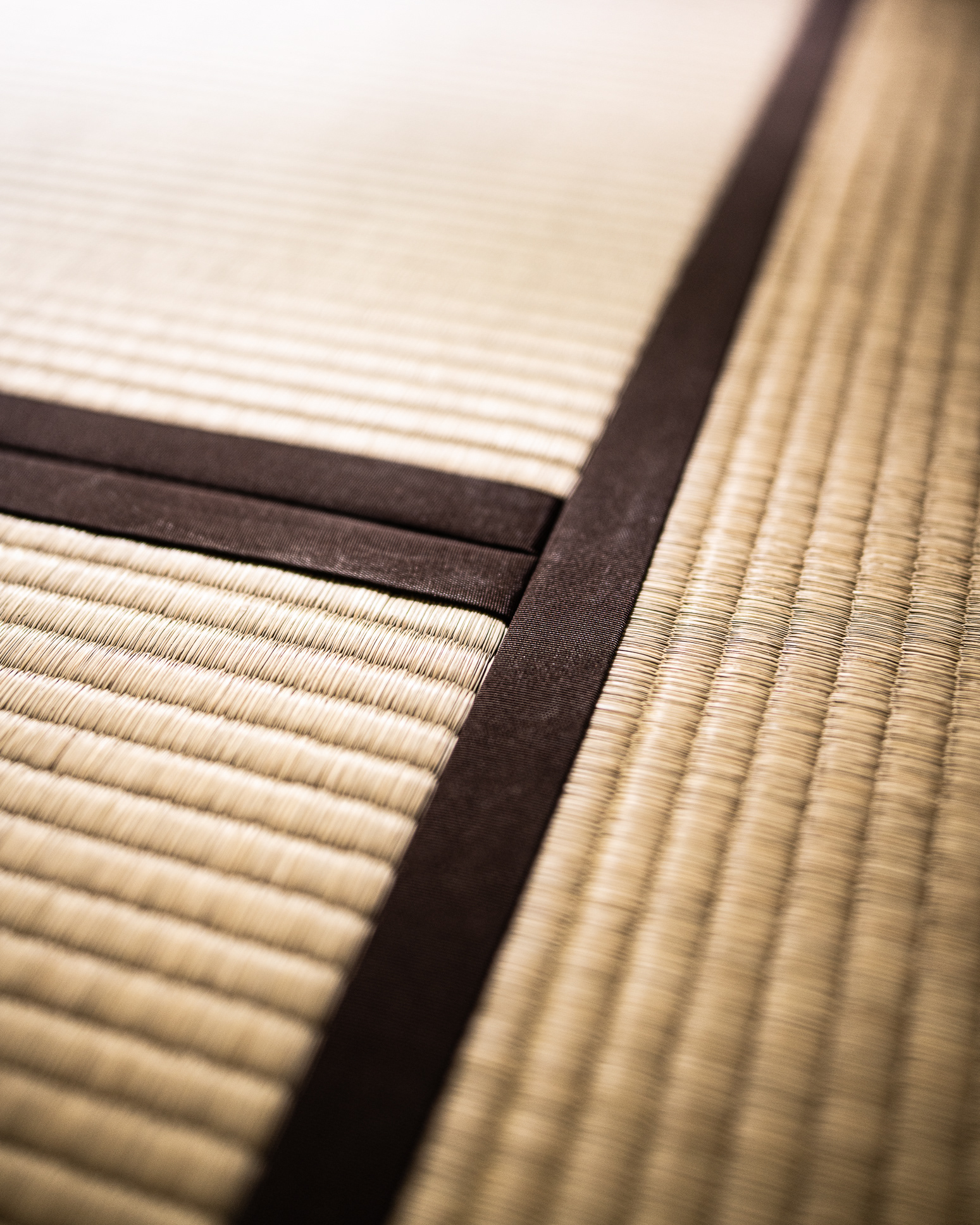
Tatami matts - in our room at Hoshi Onsen - photo Martin Kaufmann
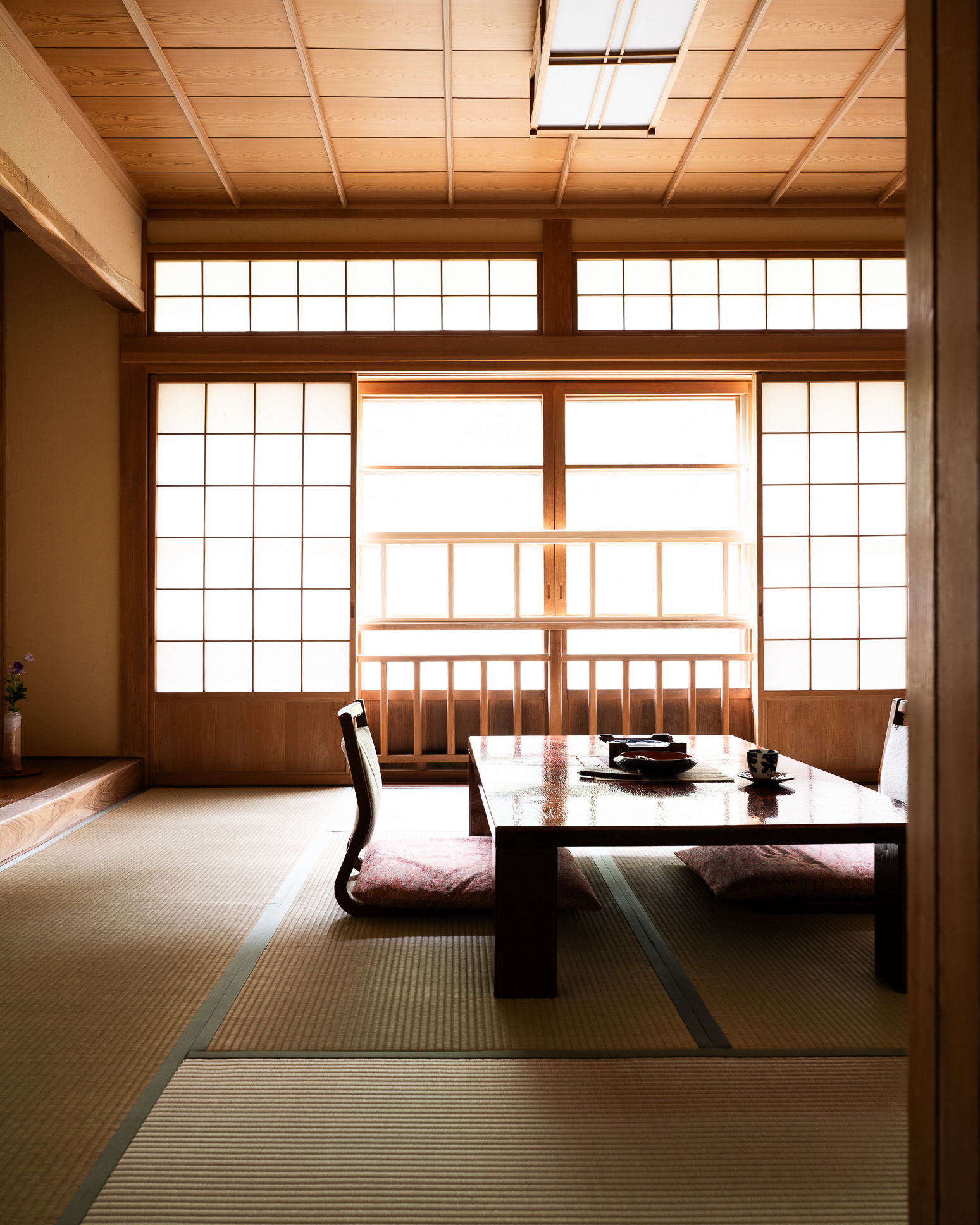
Our room at Hoshi Onsen in Gunma, Japan - photo Martin Kaufmann
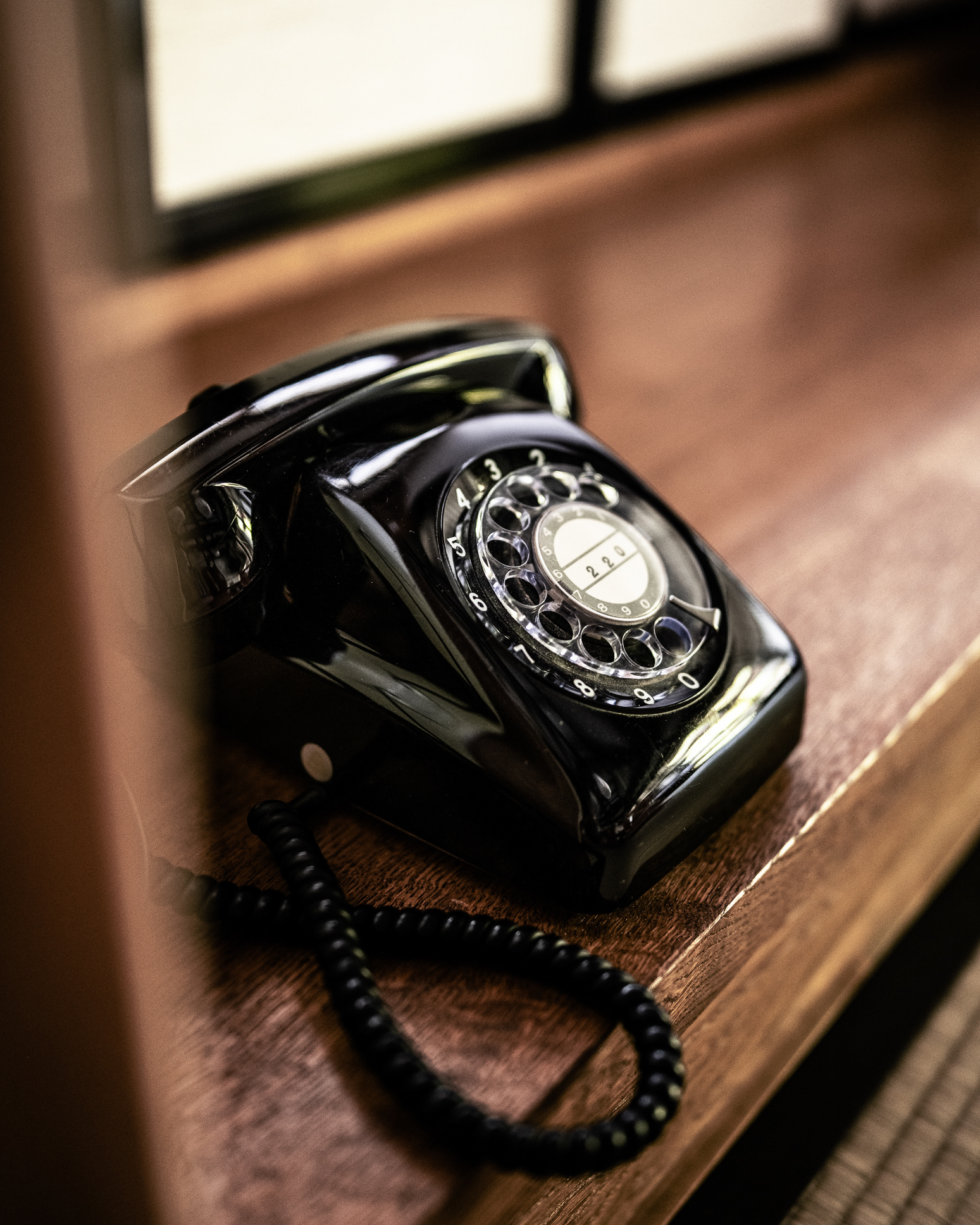
The old phone at our room at Hoshi Onsen
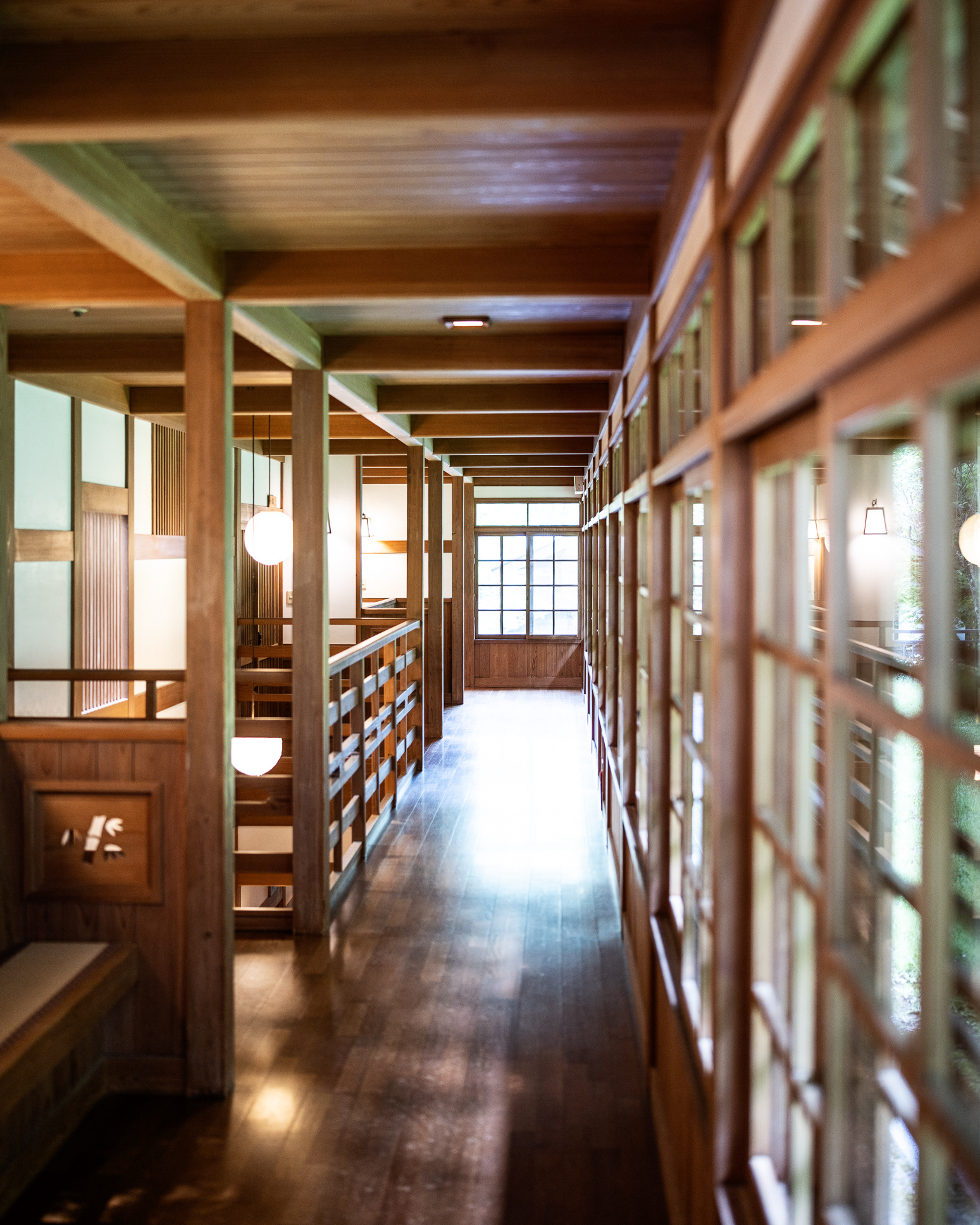
Hoshi Onsen in Gunma, Japan - photo Martin Kaufmann
The rooms at Hoshi Onsen feel like stepping into a quiet, carefully composed world where everything has a purpose. It’s about atmosphere, simplicity, and harmony with nature. Instead of carpet or wood, the room is covered with tatami mats - woven rice straw that feels softly springy under your feet and has a wonderful scent.
The space is open and uncluttered. Furniture is kept low to the ground, creating a calm sense of balance. In one corner you’ll find the tokonoma, a small decorative alcove that displays a hanging scroll with calligraphy, alongside a simple flower arrangement.
The room is arranged for futon sleeping. During the day, the futon is stored away. In the evening, staff quietly lay out futon mattresses, white bedding, and soft duvets directly on the tatami.
Large sliding doors (shōji) made of wood and translucent paper filter daylight into the room. These open onto a view of the surrounding forest, where moss, stone, water, and shaped trees create a living painting.
You’ll find a yukata (light cotton kimono) neatly folded, ready to wear throughout the ryokan, including on the walk to the baths. Along the yukata you find a haori - which is a short jacket to be worn over the kimono (see the photo below of Mette at the table). There’s also a small tea set—green tea, cups, a kettle and the wonderful old phone.
Tatami mats are traditional Japanese floor mats made from natural materials. The core is made of tightly packed rice straw, and the surface is woven from soft rush grass called igusa. They are designed to be walked on barefoot or in socks and have a slightly springy, comfortable feel. Tatami help regulate indoor humidity, stay cool in summer, and retain warmth in winter. Their subtle, natural scent is often one of the first sensory impressions people notice in a traditional Japanese room.
Tatami mats also define the layout of a room—traditional rooms are often measured by the number of tatami mats they contain rather than by square meters or feet. A typical tatami size is 90cm x 180cm.
Meals at Hoshi Onsen...
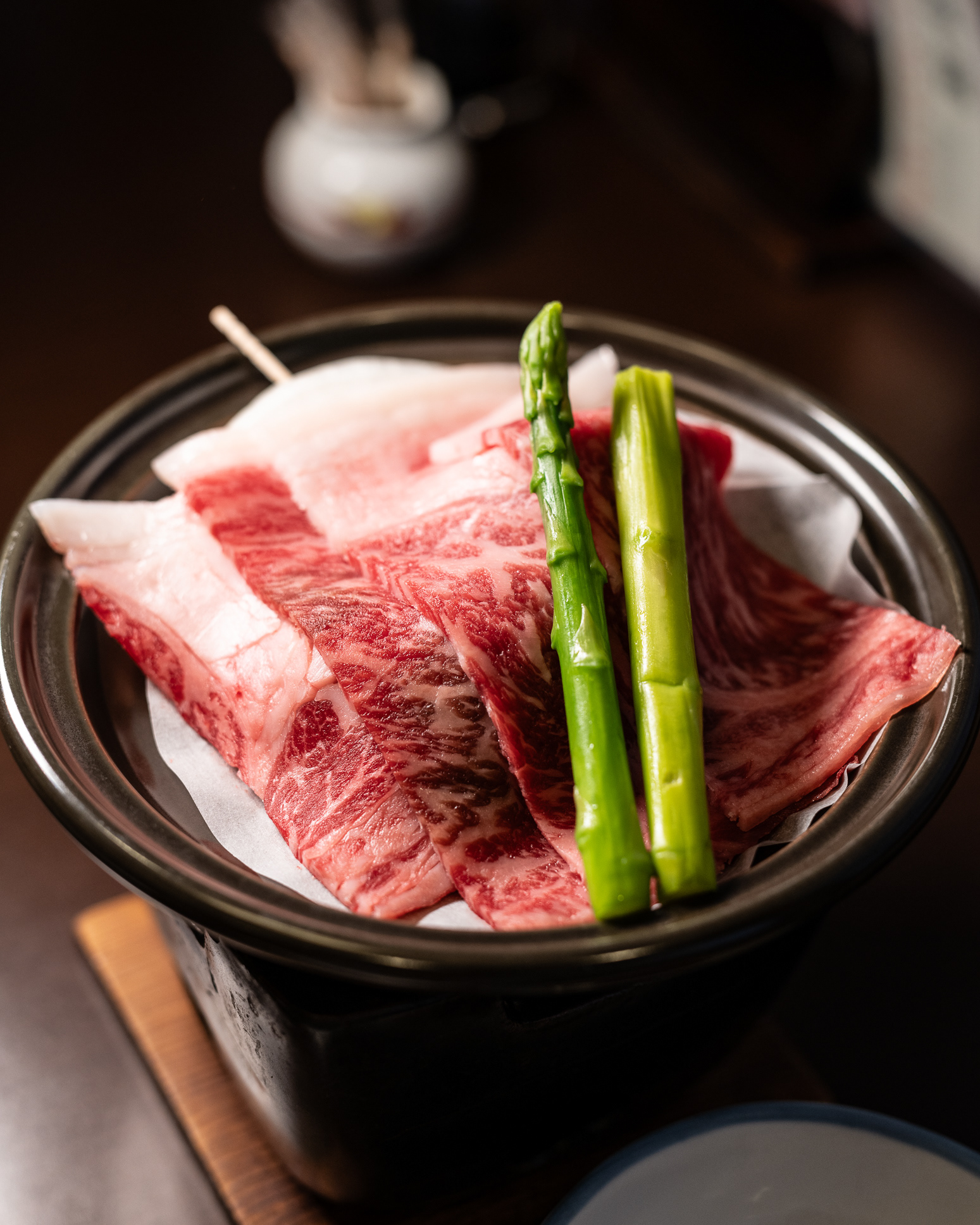
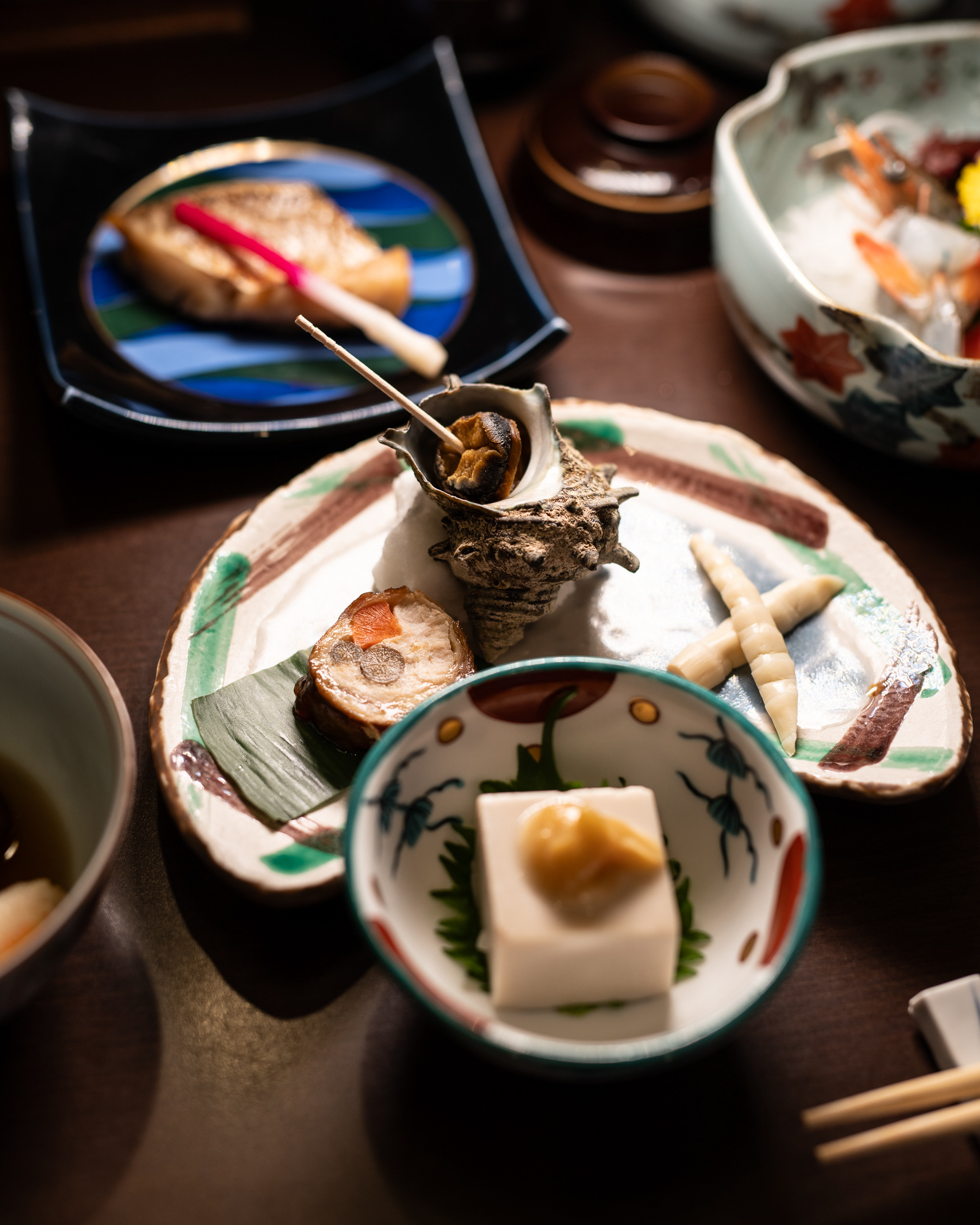
Kaiseki dinner at Hoshi Onsen in Gunma, Japan - photo Martin Kaufmann
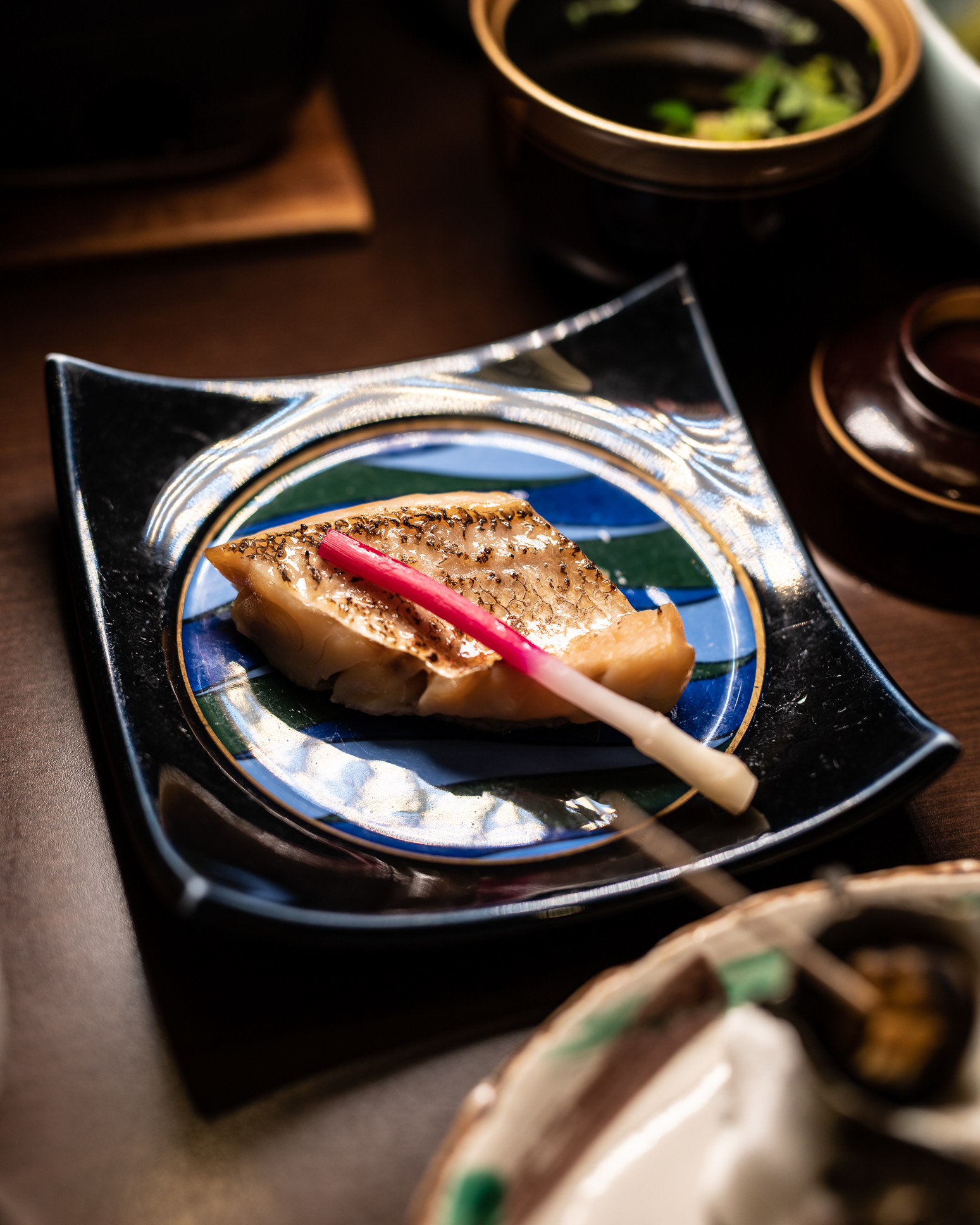
Kaiseki dinner at Hoshi Onsen in Gunma, Japan - photo Martin Kaufmann
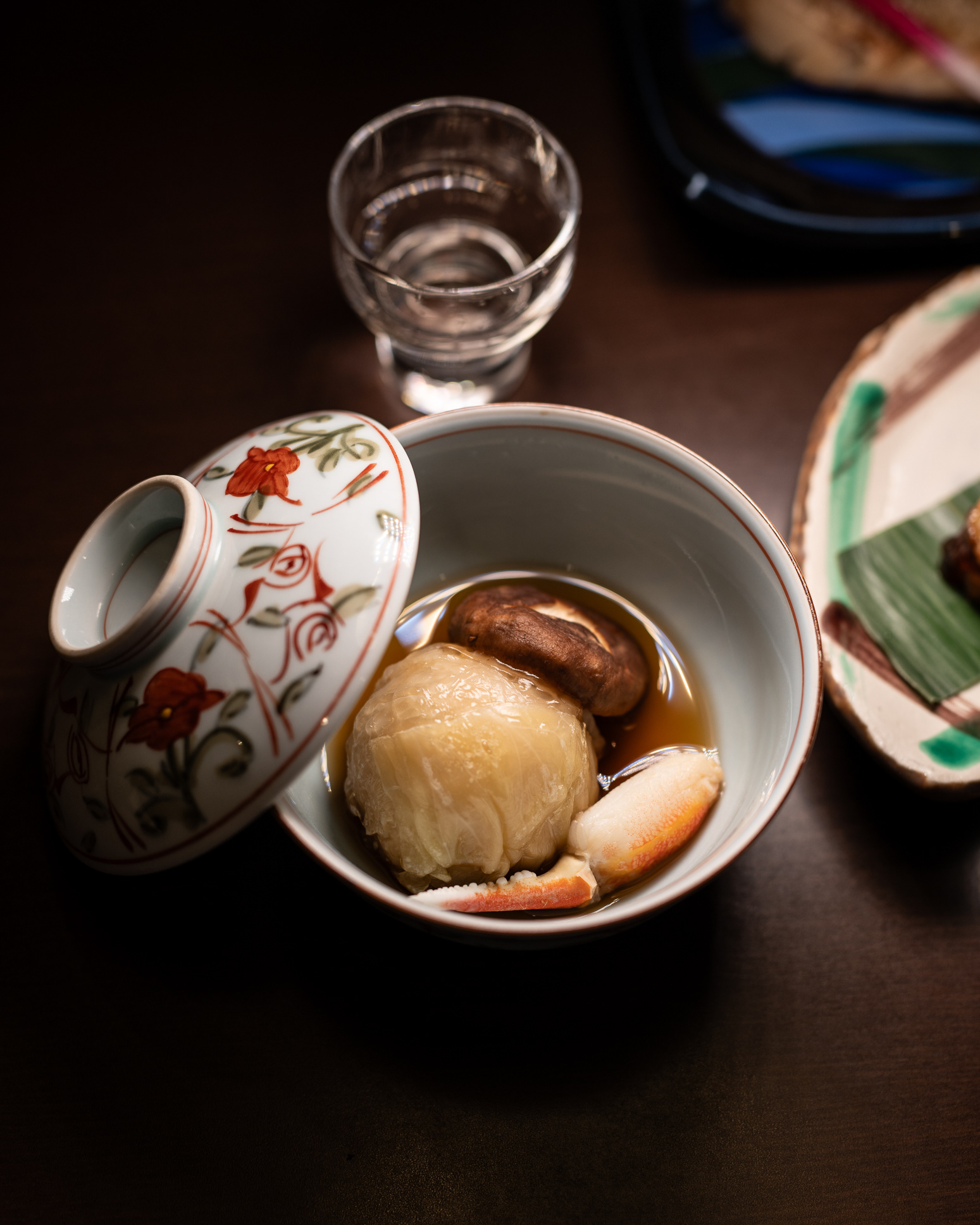
Kaiseki dinner at Hoshi Onsen in Gunma, Japan - photo Martin Kaufmann
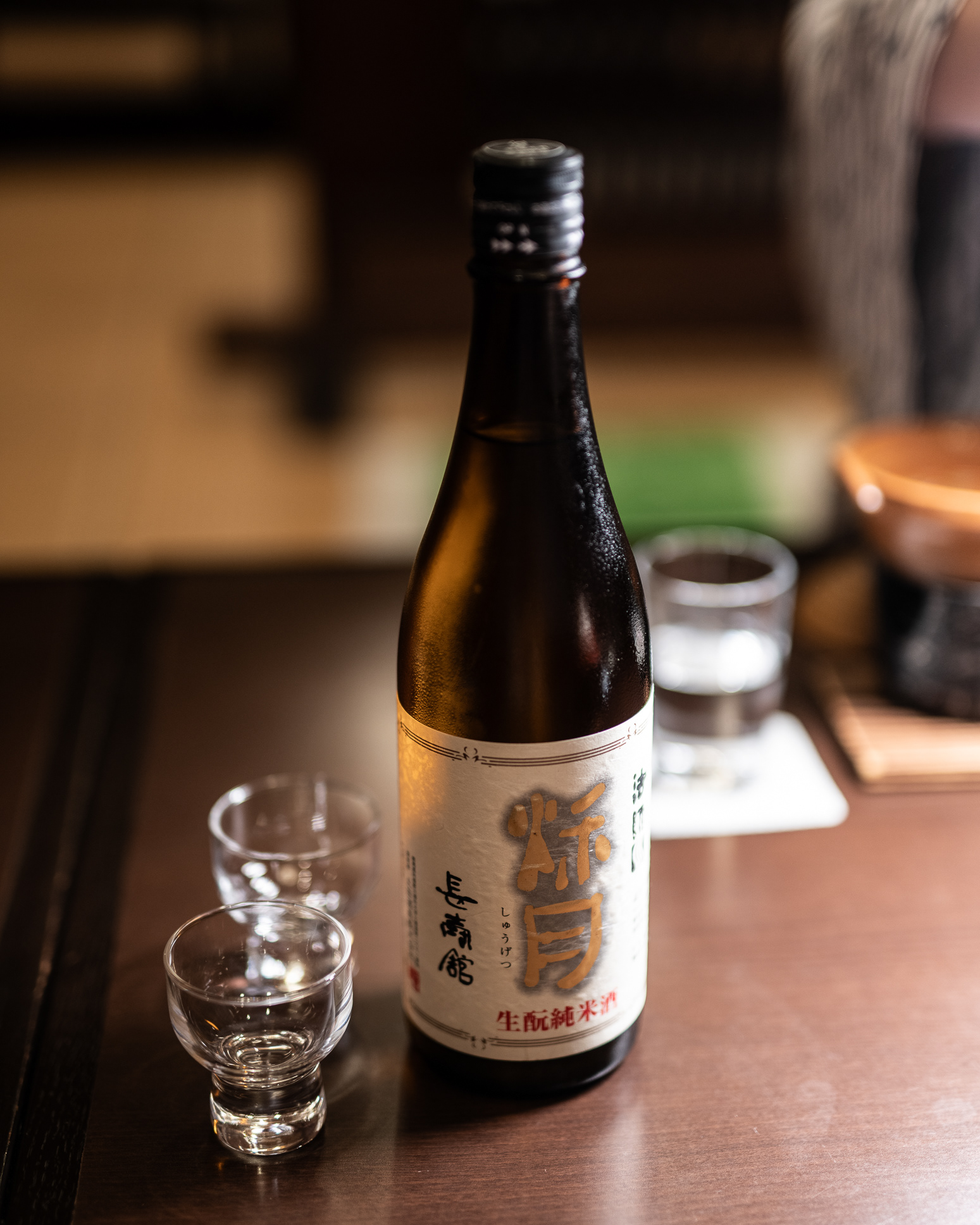
Sake at Hoshi Onsen
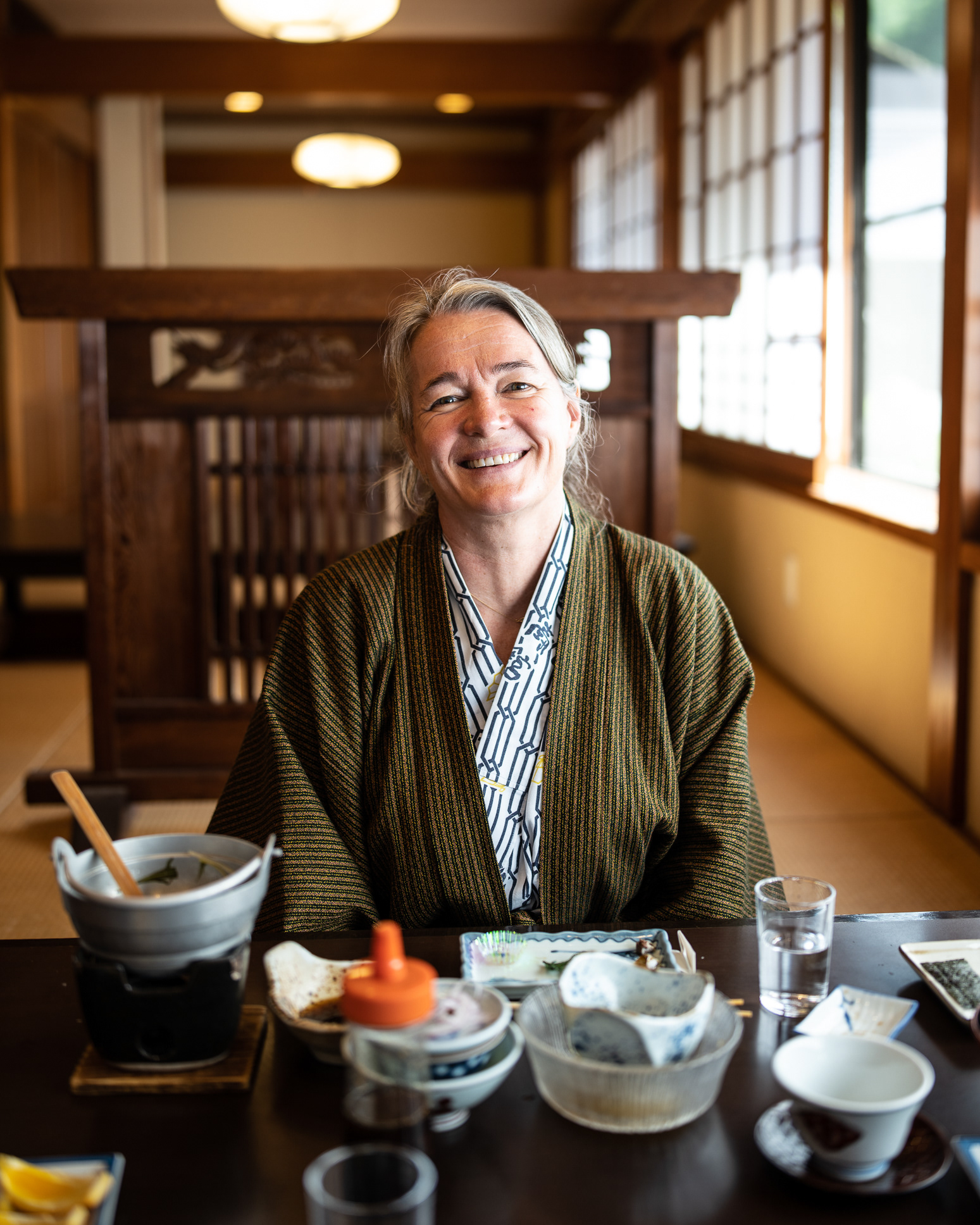
A traditional dinner at Hoshi Onsen is quite spectacular - a carefully orchestrated meal that reflects seasons and local ingredients from Minakami and the Gunma prefecture. Entering we were led to a low wooden table in own tatami room. The meals were kaiseki-style dinner, meaning they consisted of multiple small courses. If you are open minded and a food lover you will find the meals wonderful and tasty. Having said that I did feel challenged pulling out a finger long sea snail one of the evenings, but it was cooked perfectly and tasted just fine.
Here’s what a typical dinner include:
- Seasonal appetizers (sakizuke) – Small, delicate bites that set the tone, such as lightly pickled vegetables, tofu, or a piece of fresh fish.
- Sashimi (raw fish) – Freshly sliced fish from local rivers or nearby seas, served with wasabi, soy sauce, and garnishes.
- Soup (suimono or miso) – A clear, warming broth, often with mushrooms, tofu, or seasonal greens.
- Grilled dish (yakimono) – Fish or meat grilled over charcoal, sometimes accompanied by seasonal vegetables.
- Simmered dish (nimono) – Ingredients slowly cooked in a light soy or dashi-based broth, highlighting subtle flavors.
- Steamed dish (mushimono) – Often a chawanmushi, a delicate savory egg custard with mushrooms, shrimp, or chicken.
- Rice, pickles, and miso soup (shokuji) – The final staple course to complete the meal.
- Dessert (mizugashi) – Seasonal fruit, a small sweet, or matcha-flavored treat to end the meal lightly.
The breakfast we got was traditional Japanese breakfast. Very delicious and very different from the bread, butter, cheese and coffee breakfast we normally eat here in Denmark. Rice, miso soup, grilled fish, vegetables, pickled greens (tsukemono) and a Japanese omelette (tamago).
Sixth generation Okamura and tea at the sunken heart...
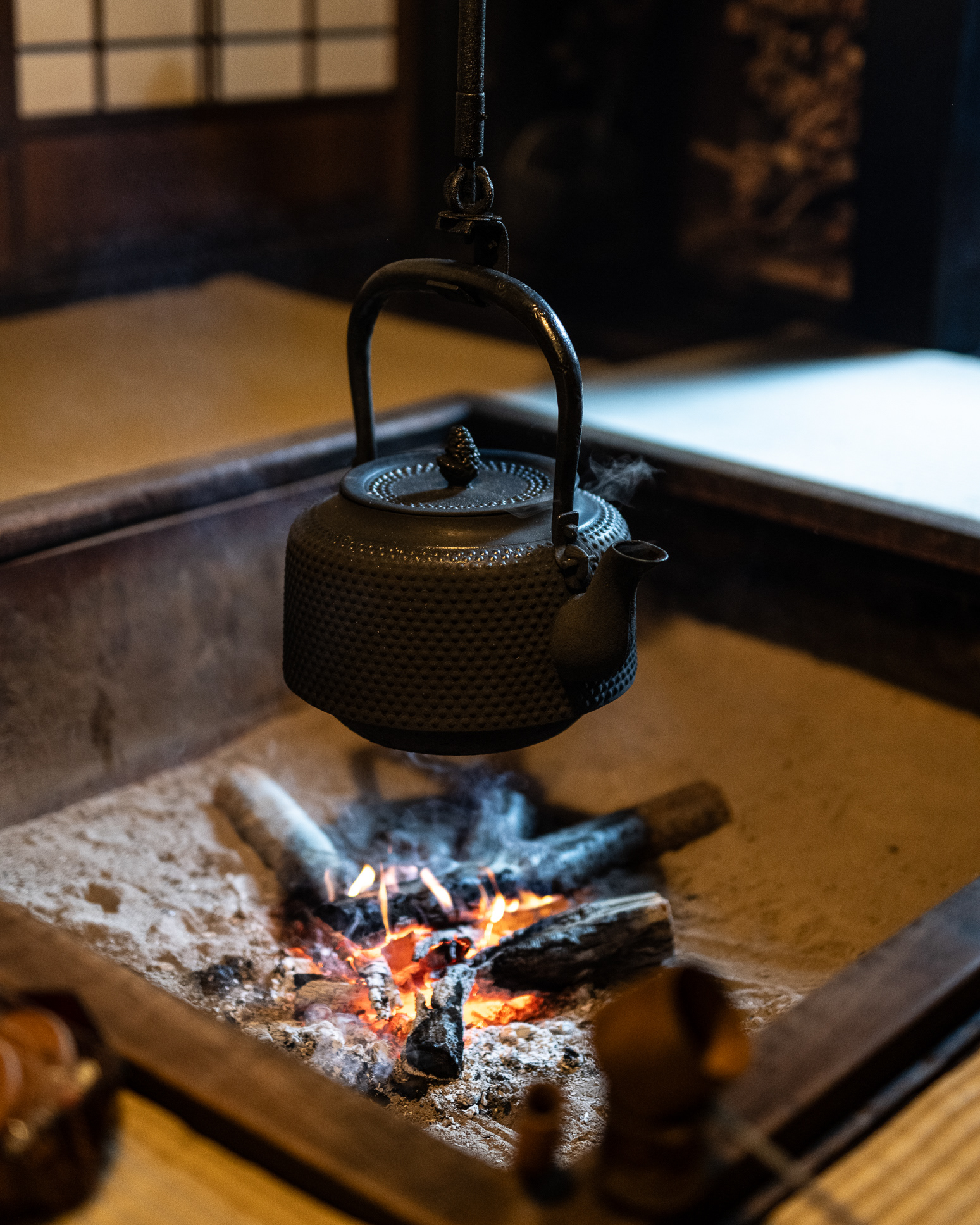
The irori (or sunken heart) at Hoshi Onsen - photo Martin Kaufmann
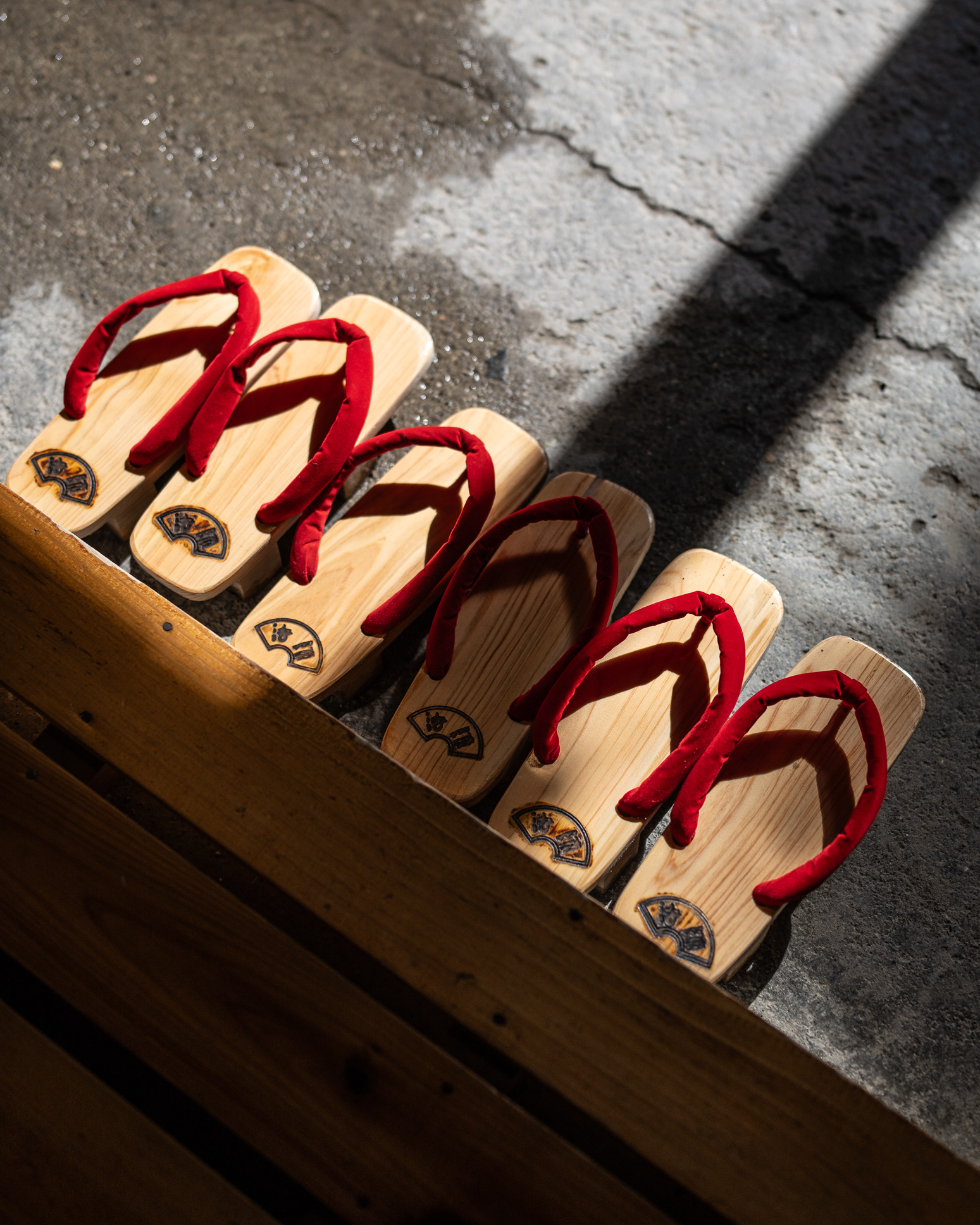
Japanese sandals at the entrance - Hoshi Onsen
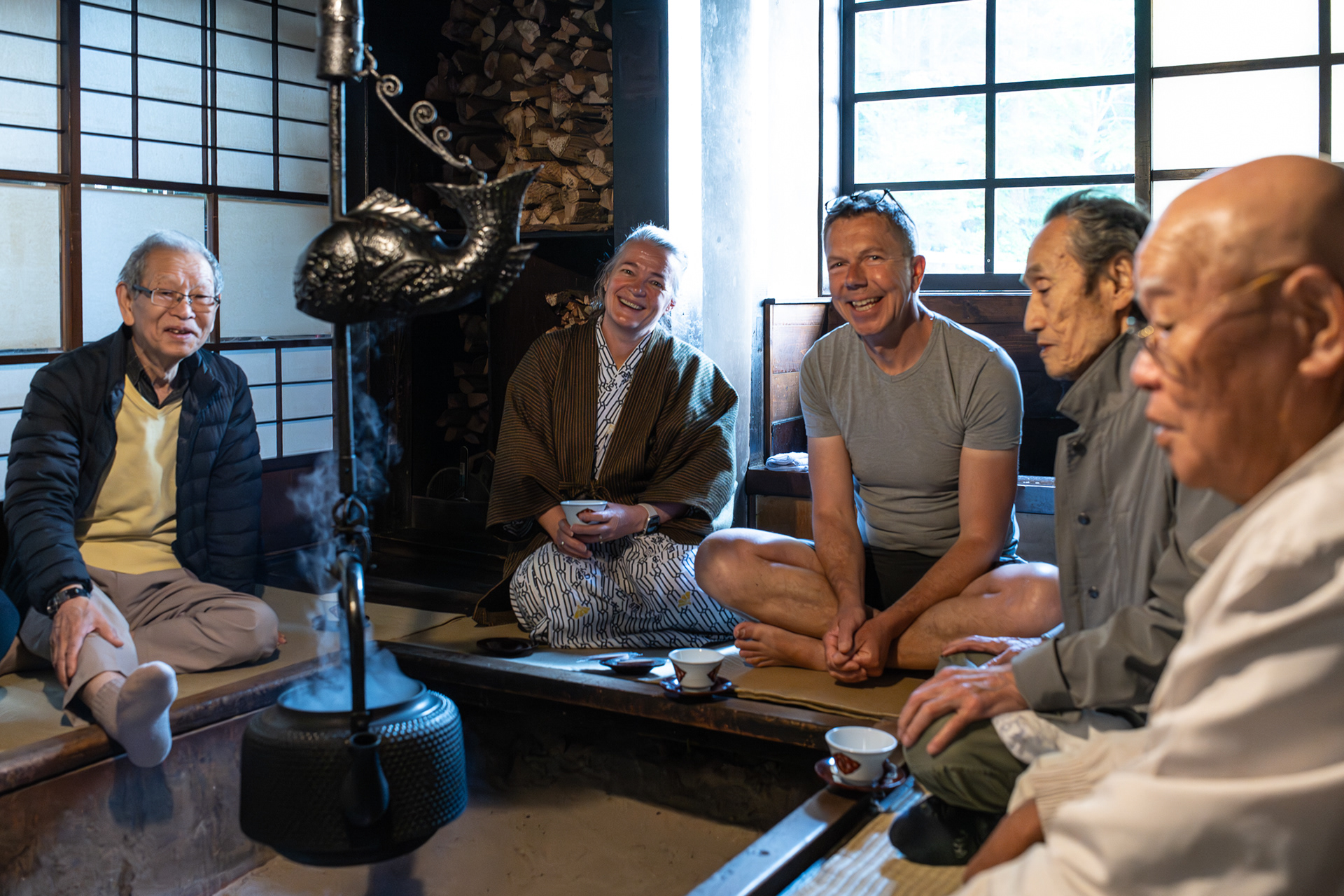
Sitting with a fine group of Japanese people at the irori at Hoshi Onsen
For 150 years the Okamura family has passed down responsibility for the ryokan from one generation to the next, preserving not only the buildings but also the spirit of Japanese hospitality, omotenashi. Hoshi Onsen is true to its roots and luxury here is defined by simplicity, silence and authenticity.
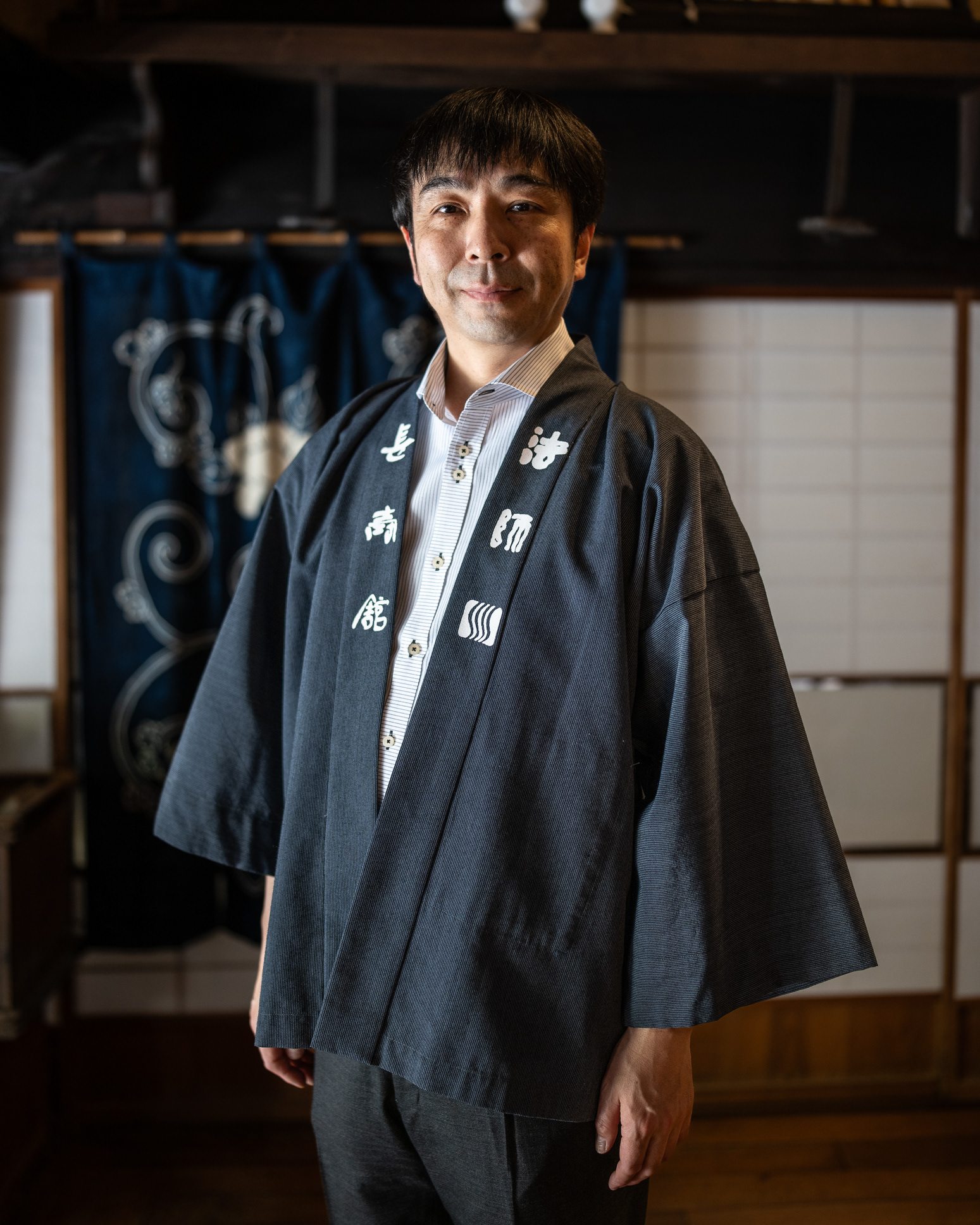
Kunio Okamura (in the picture above) is the sixth generation Okamura owning and running the onsen. Several other family members, including his wife, if I remember correctly, are involved in the ryokan.
When entering the onsen you find the irori, or sunken heart to your left. The fire is burning through-out the day with a kettle of boiling water hanging above ready for everyone to make a cup of tea. We had the fine experience of being invited to join a group of Japanese guests one of the days. All very interested in learning about who we were, where we came from and how we had ended up at the ryokan.
Visiting Hoshi Onsen was an amazing experience. The place itself, the history, the baths and the warm interest in us (as foreigners) all made the stay unforgettable.
A short explanation of onsen bathing rituals and etiquette...
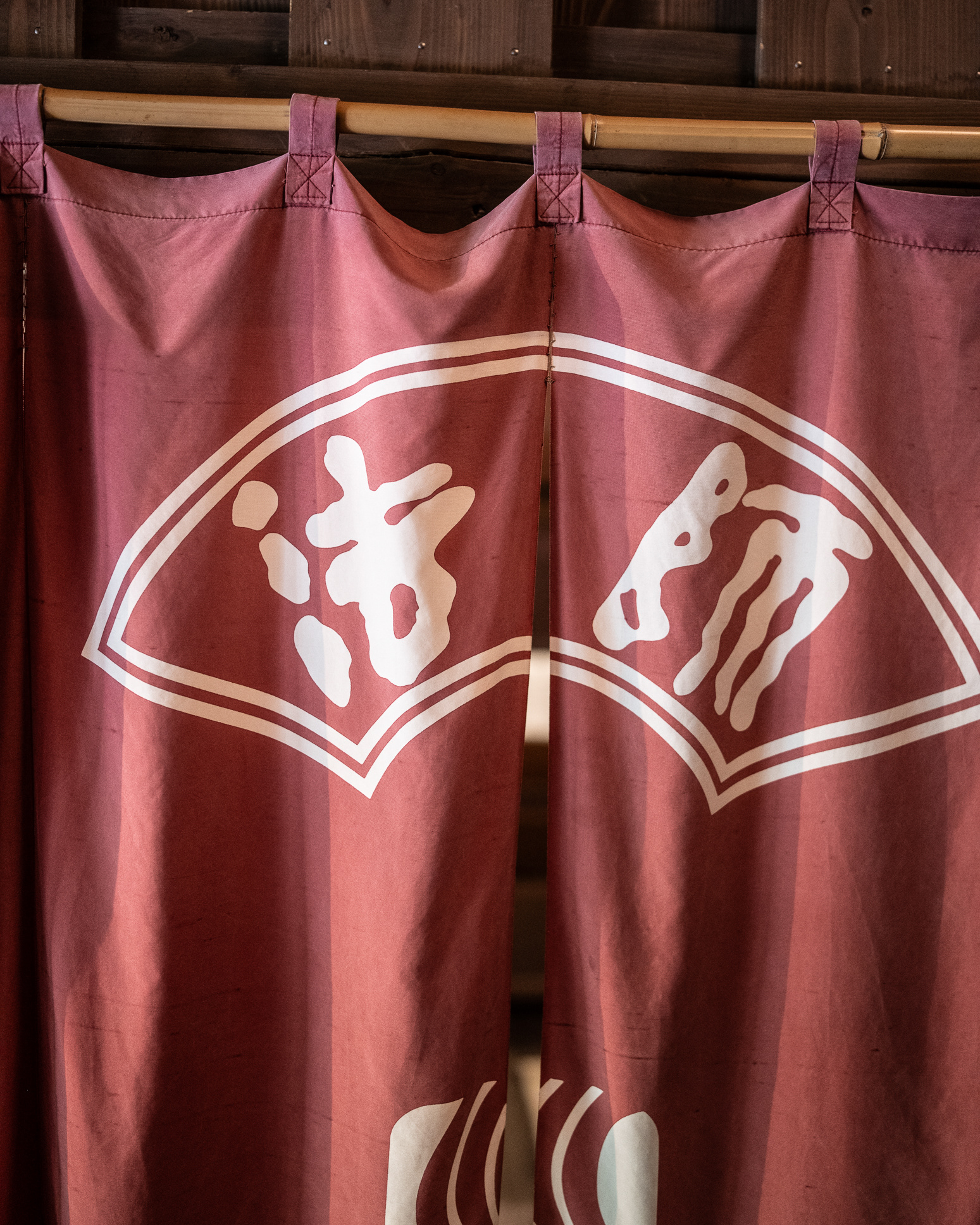
The red noren (curtain) showing the way to women's changing room at Hoshi Onsen - photo Martin Kaufmann
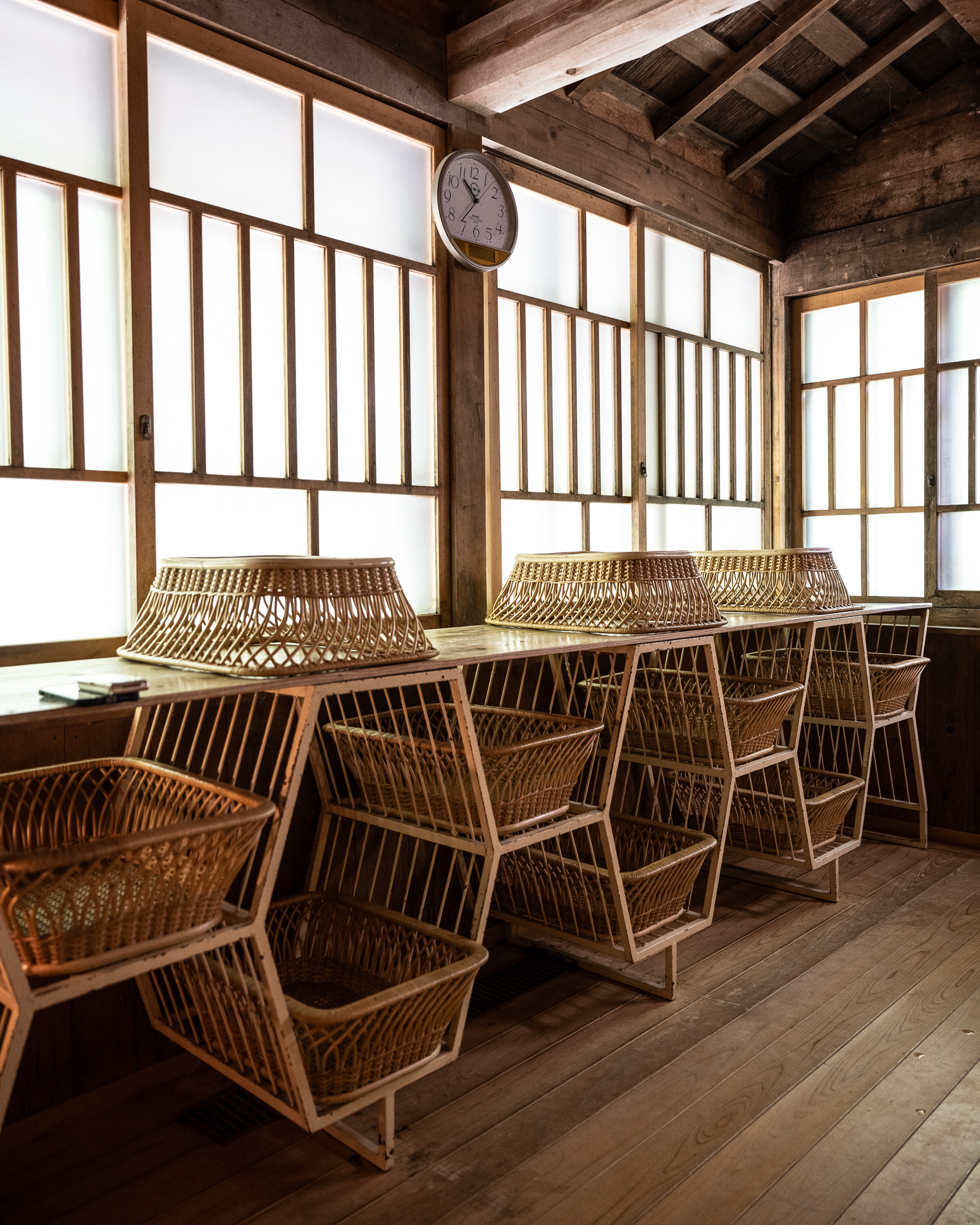
Changing room and baskets at Hoshi Onsen in Japan - photo Martin Kaufmann
When you arrive at an onsen, you step into a transition space between the outside world and the bath. Shoes are removed at the entrance and placed in shelves. You enter the changing room (datsuijo), where you undress. Colored curtains (noren) guide you - red curtains for women and blue for men. If staying at the ryokan you probably already have changed to sandals (zori) and a yukata (light version of the traditional kimono) so undressing is pretty fast. Clothing and personal belongings are then placed in baskets. This act of undressing is symbolic - you leave behind social status, work, and hierarchy and everyone enters the bath as equals.
Having undressed you start the cleansing process. Sometimes it includes a shower before the seated washing. Seated washing is a bit tricky when you haven't tried it before, but basically you wash your body (sitting on a stool) using soap and shampoo before rinsing carefully. Stool and bucket are cleaned afterwards keeping the area tidy.
You are now ready to enter the bath quietly and with respect for the place and other guests. Voices are kept low, hair above water, the small towel must not touch the water and you do not swim. The quiet atmosphere is considered essential to the healing and contemplative nature of the onsen.
Leaving the bath you lightly dry yourself with the small towel. You can wash afterwards but many Japanese bathers don't - believing the minerals should remain on the skin.
I am sure the above description does not include all rules and traditions... but it will take you to the bath without upsetting other guests. It is in other words straightforward if you apply common sense, behave respectfully and copy what the Japanese bathers do.
Link to Hoshi Onsen: http://hoshi-onsen.com/english/